In my limited exposure to films, I don’t think I have seen a film capture this utter helplessness and mental isolation that comes with living in this digitized social and corporate slavery world as earnestly as Next Sohee did.
A few months ago, I thought to myself that there’s a growing disconnect that every 20-something person I know is feeling, a sort of decay that no mainstream film is really capturing. We are still being sold the same rehashed tropes and ideas from decades ago, and we are all lapping them up.
This growing disconnect is something some are able to express, but some aren’t. No one’s really talking to anyone, really. I’ve had conversations with people only to hear stock responses, to the point that I dread conversations sometimes because I know what I’m going to hear. I’ve had “heartfelt” conversations with people only for us to forget entirely about what we’ve said to each other an hour ago. Only to repeat these same talking points the next time we meet as if it’s the first time. I’ve literally been having the same conversations every day with my flatmates / friends from a decade ago, yet we are not moving on because we aren’t really listening to each other. I meet up with some other friends, and the usual response I always get is “Chal hi raha hain yaar.” Each conversation feels like nothing more than an attempt to mask the void of awkward silence with rehearsed kinship.
No one’s at fault here. Everyone’s just lost and exhausted, too numb or too brainrotted to care about the person before them. You want to meet a friend? That means making time you don’t have, spending overpriced auto or cab fare, or riding through impatient traffic, terrible roads, potholes, spending money on ethanol-blended petrol. And when you finally meet, you’re scrolling your social media feed every 10 minutes into the conversation, you’re thinking about your journey back, about what you need to do next, about whether you’ll have enough energy to wake up, hit the gym, and log in by 9.
On some level you know that all your friendships are just one move away from ending — maybe one of you stops reaching out, and neither cares enough to give a fuck, maybe a workplace transfer, maybe a marriage, maybe a breakup, maybe someone moving in with their partner.
It’s hard to make dating work too. Both of you are stuck in terrible work atmospheres, and neither of you has the emotional bandwidth to be there for the other. When Park tells the detective, “I thought she was sulking as usual” and “I had to go to work,” it hit like a ton of bricks. If this weren’t an earnest film, you’d want to villainize him. But you see the way he changes from a happy-go-lucky person to a shell of himself, and you realize he’s helpless. Quitting isn’t easy. To take care of your health you need money, and to get the money you sacrifice your health. It’s a horrifying loop the lowest rung of workers live in. Those who sell a bit of their souls climb the ladder, and in return treat those below them with the same soullessness.
Maybe the bleakest moment in the film is when a bereaved father calls customer care to cancel a subscription because his kid is dead, and Sohee has no option but to respond with that rehearsed, forced pleasantness. Because if she slips, she’ll be reprimanded, her team will turn on her, the whole structure will punish her. That scene is suffocating, and anyone who’s been in corporate knows exactly what that kind of mechanical “tact” feels like.
Her zoned-out mother. Her tired father. Her alcoholic friend. Her friend who noticed something was off but didn’t know how to reach her. Each of them shows the same lethargy in the soul, the slow uncompromising decay of capitalism eating people alive.
The second half of the film makes it obvious. Yoo-jin pieces together the systemic workings that broke Sohee, but the answers are already obvious to us. Middle management is wired to not think in terms of humanness but in terms of data. Fancy figures on a sheet can never capture the burden Sohee carried, the weight that made her end her life. For every Sohee who breaks, there are a hundred who don’t, who continue in the system. She’s replaceable. That’s why the system never feels responsible. The manager blaming the school, and then her suicide for their bad reputation, says it all. He can’t afford to think in human terms because if he does, his own boss will destroy him.
When my friends and I got hired through campus placements in 2022, we cheered, we hollered, we were ecstatic. The energy was infectious. University was ending, the corporate world was opening, we thought life was beginning. That night we drank, we dreamed, we promised to stay in touch, to meet every month, to finally be independent, to marry our partners, to date, to do everything we wanted.
Now the meetups are almost gone. Living is brutal. Those with partners broke up. Those single are still single, still struggling, because they don’t have the time, money, energy, or confidence to date. Honestly, it’s hilarious on some level.
This capitalistic, corrupt world has eaten into everything. And as we look forward, with talk about work hours increasing, CEOs dismissing dwindling workplace morale as “Gen-Z entitlement” or “laziness,” friendships have become time consuming and heavy on the pocket, love, marriages reduced to transactions, news filled with suicides, “moment of passion” murders, spouses killing off their better halves in ingenious way, impatient road-ragers, scams at every turn, food quality deteriorating — what’s left? Even empathy, even community, the only comfort we could rely on from the soullesness of the corporate world has been swallowed up by the system too. The collective decrease in morale is clearly palpable.
The film ends with Yoo-jin watching a single video Sohee left — her dancing in the studio, her one joy. She was the best dancer, she loved it. But she had to quit because work wouldn’t let her have the time.
Perhaps if even one of the aspects in Sohee’s life weren’t this bad, maybe she wouldn’t have taken the step – maybe a deserving pay, maybe a less stressful work environment, maybe a good work-life balance, maybe if she had the time to go to the dance studio regularly, or maybe even if her friends and family living healthy lifestyles could help her deal with what she was going through. Who knows?
Maybe this piece of writing is too disjointed, bleak and pointless, maybe things aren’t so bad, and maybe I am just being a whiny, privileged person, because some people have it way worse, and don’t even have a job. But Next Sohee hit on something raw and unacknowledged that I haven’t seen in any film, something that is paplable to so many, but is hardly spoken about. Much like the customary corporate dinner party celebration, all support systems, and ‘Take Care of Your Mental Health’ messages seem empty, because they fail to address their utter meaningless that comes from all the stress that people deal with as corporate employees – at the sacrifice of their own health.
When Nagaraj Manjule’s caste-based atrocities film ‘Sairat’ was picked for a remake by Bollywood as ‘Dhadak’, that too by Karan Johar’s Dharma Productions, and with actors like Ishaan Khatter, and Jahnvi Kapoor, it quite predictably ignored the deeper cause that the film represented and took a safer, more palatable route of addressing the primary theme of lovers dealing with a class-issue as opposed to ‘caste-issue’. Frankly, I don’t see a problem with this, it’s a stupid decision to make, but stupid is easy consumption, and easy consumption is what sells.
But with Dhadak 2’s announcement, the idea was puzzling, this time, the producers had decided to adapt the brutal Mari Selvaraj’s Pariyerum Permual.
A film so rooted in its caste themes that it’s indistinguishable to turn into a mere ‘class’ film – what was even more puzzling was the casting of Siddhanth Chaturvedi, and Tripti Dimri – two faces that are far from the purview of films that fall into this category.
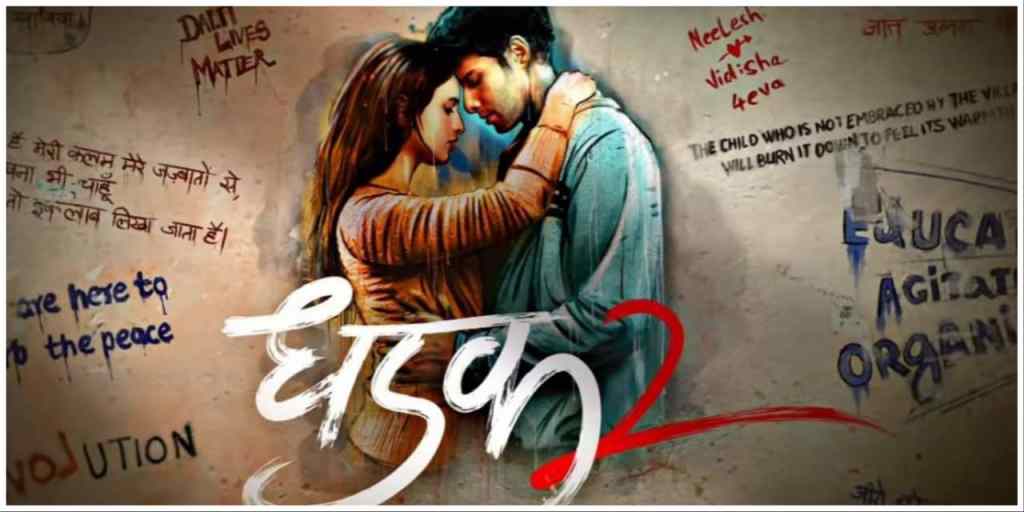
When I first saw this poster, I was expecting a cringe woke ‘checklist’ type of film, with no regards whatsoever to make a compelling and effective narrative,
My interest for this film only piqued when I watched the trailer of the film and was quite intrigued by how much of the source material still seemed to be retained. With my expectations in check, I decided to watch this film purely to support the novelty of the effort to bring stories like to this forefront.
Now, there’s a certain uncomfortablness that creeps in, to watch Savarnas indulge in producing art that’s related to the experiences of the marginalized communities. The protagonist of this film, without a hint of subtelty is named Neelesh, who lives in an unnamed colony in Bhopal called Bhim Nagar, the first twenty minutes of the film has so much blue, and Ambdekarite references and imagery that you are almost left feeling worried and amazed that a Dharma Productions film even made this happen, and it managed to get released without too much censorship (although I am aware that the film went through 16 cuts) but there’s enough in this film to unsettle the status-quo – the film despite largely following the Bollywood visual language and tropes, yet manages to effectively, and unbashedly discuss what it wants to – head on. Take for example, a scene where a potential groom’s family visits Tripti’s house to discuss an alliance with her sister – the music that plays through this scene is comical, Tripti is a wise-cracking law student who plays a game of asking 5 questions to the groom’s family, and within these 5 questions the film also lays bare the two main themes that film explores – the agency of a woman, and the idea of caste and how it permeates the identities of our societies so deeply. It’s all done so comically, but you also get an idea of what to expect from the story.
Of course, people accustomed to the hard-hittingness and rawness of Tamil cinema will dismiss this levity, and scoff at the ‘Bollywood-ification’ of Pariyerum Perumal.
But what we need to really understand is that this is a Dharma Productions film, catering to a schmaltzy, cutesy love story loving crowd and has also defined Bollywoood since decades. To jump headfirst into giving its audience the same kind of rawness as Tamil cinema is abrupt, and off-putting.
Perhaps this mixing of ideas is depicted best when Neelesh is invited to an upper-caste wedding, and he has no clue what to dress like – he dresses as his favorite actor Shah Rukh Khan, and goes to the wedding where everyone’s dressed in kurtas, manyavars, suits…. Neelesh arrives wearing a brown leather jacket.
Those who’ve followed Bollywood, know how much of a large figure Shah Rukh Khan is – the undisputed ‘King of Romance’s films have come to define Bollywood as the place of dreamy love stories which have come to define our ideas of romance and love for decades and still continues to. So, when Neelesh decides to dress up as SRK and come, a Savarna perspective would be dismiss his style as ‘chapri’. But, with Neelesh dressed up as SRK, standing awkwardly in the wedding party of an upper-caste family, what we also see is the naive – cheesy, cookie-cutter Bollywood love story now entering the hard-hitting reality of ‘love’ in this country. A caste-divide, that mainstream Bollywood has shyed away from decades to show.
Thereby the debutant filmmaker Shazia Iqbal juggles the language of cutesy, Dharma Productions Bollywood storytelling, whilst also not holding back on the reality of the original.
This film even manages to sneak in a peppy dance number in the wedding sequence. And I was loving it.
Neelesh, who initially chooses to be apolitical is teased by an Ambedkarite, telling him his life has been political ever since he was born, the mere act of loving someone becomes a political act.
The rest of the film follows what happens when a naive, dreamy eyed Neelesh dares to enforce his identity as a Dalit man, and how reality continues to hit back at his masculinity.
With Dhadak 2, the makers have not only managed to attempt at juggling Bollywood storytelling with the rawness of the Tamil original, but have also ehanced the original by giving the love interest (Tripti) a stronger voice, and a character arc, unlike the original. We see Vidhi (Tripti) struggling to love Neelesh, as the people around him send him on an existential madness each day as he dares to question the status-quo around him.
Moreover the addition of an Ambedkarite leader character, Vidhi, Vidhi’s brother, all add a certain uniqueness to Dhadak 2 to manages to stand on its own despite the looming shadow of the original, these new additions lead up to newer directions in the second-half, which may or might not work for everyone in its execution, but works as a nice reminder that an ‘adaptation’ does not have to be a lazy remake of the original, but an ‘adaptation’ should add something new for the audience to take home.
And as much as lovers of the original might not like the idea of a Dharma Production-core Pariyerum Perumal, this is a bold, and appreciable step in the right direction.
With the sort of return-to-roots wave that’s going on now in Bollywood with potboilers with angry men gaining back attention again, and cheesy love stories (Saiyaara) making a comeback.
Bollywood is slowly getting back to bringing back its core audience and not desperate to become like European, or Hollywood cinema and failing at them.
During this return to roots wave going on – like it or not, the mainstream is dominated by Savarna storytellers, a film like this while still maybe unsatisfactory in representation, a Bollywood love story hit with the brutality of real life, produced by one of the iconic production houses of Bollywood, which is known to make dreamy love stories is an appreciable thing.
It’s hilarious to think that caste is a predominant factor in love and marriages in this country, yet the industry that has defined love stories has shyed away from addressing this theme head-on until Dhadak 2.
Please do go watch it if you have the time, and support such films.
I’d watch it again if I could.
Please go watch it before Coolie and War 2 eat up all the screens in the next few weeks.
Note: Before starting, I’d recommend you to listen to Jaanam by Suryakant Sawhney (Lifafa) from Dibakar Banerjee’s Detective Byomkesh Bakshi OST in the background whilst reading.
This image is AI generated.
Unless you’ve been living under a rock, you might have come across the viral trend of ‘ghiblification’. A new feature in Open AI’s ChatGPT update that turns any picture into a warm, fuzzy animated frame in a style synonymous with the work of a prolific Japanese animator called Hayao Miyazaki.
The aesthetics of his frames have a soft, comforting vibe to them. The characters that are created look so endearing and touching, you find yourself fully involved in the lives of these characters. The detailing is so rich that even the most mundane activities make you pay close attention. A live-action equivalent would make you complain about the ‘lag’ in the film.
His films have dealt with heavy themes like war, depression, environmentalism, dehumanization, death, moral complexities etc. These are all done in such a palatable way.
His work has evoked such an impact that the studio under which he produces his work, and is also the founder of, has its own identity. A Studio Ghibli film brings to mind a certain atmosphere. Something despite the difference in films, and the genres of these, a certain pathos that’s garnered a dedicated fanbase of its own. This is a result of his perfectionist method of crafting his frames through a long, grueling process of development. His latest film ‘The Boy and the Heron’ which won the Oscar for the Best Animated Film of that year took 7 years to develop.
On March 25th, 2025, Chat-GPT rolled out its new update. Its image generation feature that has often been on the receiving end of trolling due to its inefficiency and absurd results that unintentionally end up in fever-dream or nightmare fuel territory was now capable of generating images that were much more improved.
Soon, the internet took to prompting Chat-GPT to take their photographs and generate an animated version of these. Naturally people began asking the AI model to recreate their images as if they were frames from a Studio Ghibli film. The animation style seemed to have striked a chord among people. Soon the term ‘Ghiblify’ took the internet by storm.
All across social media, people began posting cute pictures of ghiblified versions of their photographs. The once soulless and dead-eyes captured by smartphones and cameras now looked earnest and compassionate.
These specific style of frames that Miyazaki would take years to develop, and the quality of which took decades to become iconic, was now being able to be recreated within a matter of minutes.
Now, even the most bigoted person you know has generated a version of themselves that bears a resemblance to the innocence of a Studio Ghibli film character.
Like all things mainstream, the evidently right-wing folks took notice of it and began ‘ghiblifiying’ their problematic history. Someone had ghiblifed the famous picture of the Babri Masjid demolition in 1992. Someone else seemed to be obsessing over the lack of a janeyu in the ghiblified version of his image with the same precision and perfection that Miyazaki practices. The Ghiblified image of this man without the aforementioned context would have given off the impression of an affable, comfort character in a Studio Ghibli film.
Even the Prime Minister’s ghiblified version looked less like a dictatorial goliath and more like a cute grandpa in a Miyazaki film who will share words of profound wisdom and not “MAGA + MIGA = MEGA”.
Like with all things mainstream, came the backlash. This time rightfully so. Many aspiring, struggling, practicing, successful painters, designers, artists spoke vehemently against this trend. They saw it as an insult to Miyazaki and the artform of drawing itself.
Even the guy who has never drawn anything beyond two suns, a house, and a sun in his school’s drawing book was tweeting about his ‘creation’. A Ghiblified version of his photograph.
Some people who appreciate the art form while not being proficient in it themselves, lend their solidarity by refusing to upload any ghiblifed image of themselves.
I cannot imagine the existential crisis that would burden Miyazaki at the age of 84. Watching his art style which he painstakingly takes years to make, being cheapened, replicated and produced within minutes.
Miyazaki’s work is now more famous than ever. But is this really the kind of fame an artist like him would cherish?
Miyazaki’s comments on AI imagery in 2016 ring true more than ever today. “I strongly feel that this is an insult to life itself.”
Miyazaki’s comment seems to come out of disgust towards this technology as AI imagery can never reflect the soul of an artist. The pain. The heart that goes into the making of the imagery.
There is something tragically ironic about the fact that an artist whose films have had carefully considered scenes of stillness and quiet experiences of passage of time, which are made so engaging owing to his painstaking effort, is now at the reception of public who are enjoying the experience of generating cheapened imagery of his style within minutes.
The Ghibli art style is not so unique looking anymore to the average person. The fatigue with this trend would soon hit. Miyazaki’s art will now be looked at with lesser curiosity and wonder than before.
Unfortunately for Miyazaki, or the folks at Studio Ghibli, or any of the artists protesting against this trend, the ugly truth is that people seldom care for the struggle behind the art. The backlash against this AI upgrade doesn’t fall to deaf ears, but to apathetic ears.
Taking the example of a country like India. Art has rarely been a matter of thinking to the average person. A third-world country which has everyone in survival mode does not have the privilege to pontificate on art on a general level. Art has barely been able to be seen as anything serious.
In fact, comedians in this country are lynched. Plagiarism is barely regarded as anything worthy of news. In fact when in 2022 the filmmakers behind Kantara had plagiarized a song from an independent band, many were puzzled over the dismay expressed by the band and claimed that the band should consider themselves lucky because such a huge film has taken its song and has made them more famous. In 2017, comedian Abijit Ganguly faced a similar predicament when Kapil Sharma seemingly plagiarized his joke. A section of Kapil Sharma fans deemed that it should rather make a comedian like Abijit Ganguly happy because India’s biggest comedian at that time used his joke and has hence given his joke more exposure.
Despite cinema being a major artform that’s being consumed in this country, the discussions regarding popularity and box office performances have far overshadowed the discourse than engagement with the text on a critical level. People only seem to care about “goosebumps moments” in films. A phrase that seems to be a common trend among the cinephiles of this country and often seems to be a yardstick for the success and popularity of the film.
Anything beyond that is seen as ‘woke’ behavior or ‘over-analyzing’ films. When a powerful medium like cinema that has a history of being used as a tool for propaganda, the public today refuses to look at it as anything beyond entertainment. Films with visuals of gyrating hips, dance-steps which are increasingly looking similar to sexual thrusting, romantic song sequences with alarming age gaps are celebrated as cultural moments in cinema halls. One would imagine that the ‘ghiblification’ is something that’s far from the comprehension of public as something problematic.
Whatever discourse that happens beyond the critical level is often only relegated to technical merit of these films. Hence, you will notice that most of the pan-Indian films are soulless. The themes might be different. But the language is redundant and bares likeliness to the pan-Indian blockbuster that has come a few months ago. That previous film would bear likeliness to the blockbuster before that. Nothing makes me more disinterested in a film than the term ‘pan-Indian’.
Bollywood seems to be a pathetic victim at this. Because in its attempts to recreate success through its MBA style analysis of its successful products, it has killed the industry that had ironically been the artificer of masala filmmaking that permeates most blockbusters today.
This ChatGPT update seems like a no-brainer to a culture like this. You want a drawing of an image, and the AI takes minutes to make. Whereas an artist would take hours, and wants to be paid for it too. Which would be the better alternative for a country that thinks like this?
It was surreal scrolling through my feed and looking at Ghiblified pictures. Also scrolling through stories, tweets, reels and posts about people expressing their dismay over this.
Soon, the rants from artists were overdominated by these Ghiblifed images. There’s barely anyone who gives a fuck about what these artists are suffering through. Who cares about the novelty of it? After all why would anyone care about it when you can create an image that you want within minutes.
The accessibility of AI has made generation of likeness of art much cheaper and magically faster. Miyazaki isn’t the only victim of it. There will be many more to come. AI has made it possible to generate not just images, but even music and writing. What you get with AI is scripts, videos and music generated through formulas that are sampled through the works of successful artists that have dedicated their time and effort to generating them and crafting something that has struck with the audience.
The artist and the context isn’t much of a relevance to the generated AI image or the ‘creator’ of it.
In this ‘attention-economy’ when even a 30 second reel might seem to be a chore to sit through, it is hence rife with extraordinary editing craft and graphics to keep you engaged. Your average content creator can achieve with a 30 second clip what many creatives, especially filmmakers can only hope to achieve in their oeuvre or films spanning over hours.
Today you will come across reels where there are two screens with different things happening within the same reel. Both bearing no contextual similarity or correction to another. You will even come across reels with imagery of a tragic news in one frame, a dancing monkey within another frame, and a Bhojpuri song playing in the background. A caption referencing something you might or might not be aware of. The sheer juxtapositioning of all these things happening within one large frame simultaneously evoke such a mix of emotions that experimental filmmakers can only dream to achieve in their lifetime. These are all a result of virality and bite-sized consumption that has now become as much a part of our regular life as much as snacking and napping is.
A few years ago, one could at least chant the cliche of turning your phone off and living out in the real world. But in the present day even if you do so, everyone else is looking down at their phones and are shifting through trends and cultures faster than you can keep track of things.
In the past few weeks ago, I had gotten too overwhelmed by the disturbing news. The increasingly repetitive nature and brain-rot of the content I was consuming. Coupled with the beautiful soul-sucking nature of my work, I uninstalled my Whatsapp and Instagram to try and preserve some of sanity. In the interim I had come across Uniyal’s Vartmaan and fell in love with the song. It’s a beautiful rap song about how the roots of culture are being smothered by consumerism and cultural ignorance. Interestingly, the hook for this song is taken from an Indian post-modern film with traits like dadaism, pastiche, satire, absurdism and deconstruction as a way to poke fun at the growing hypocrisy, social evils and decaying of Indian culture. In today’s world, these themes can all be covered within the narrative bandwidth of a 30 second reel.
I instantly fell in love with that song and kept playing it on loop. I would rather randomly blurt out the starting lines of the rap song countless times. I began imagining scenes from short films I would never make and feature this song in the background. This dream came to an abrupt end when a friend began randomly singing the starting lines of this song and I jumped with joy, thinking I found someone else who loves this song. His response came with amusement towards me. The song had gone viral on Instagram a few weeks ago. In fact it had become so viral that people are now annoyed by the song.
I installed Instagram and every other reel I had come across had this song featured. It had even prompted a dance trend which originated from another content creator. Now referred to as ‘syncpaglu’ due to the all-encompassing nature of his dance steps which seem to sync well with any random song. Even a Teams ringtone. Or a Samsung phone ringtone.
Many content creators had uploaded reels of them dancing with these steps to Vartmaan. There was even a popular skit about a person going “Vartmaan….aankhon ka dokha hain” randomly at different parts of the day. Many users found it relatable and hence it had amassed millions of views.
So, what I thought was just a quirk limited to just me was now a trend of the past few weeks. I had lived through the short lifespan of this trend without even becoming aware that it had been a trend. Come to think of it, the reason the song featured in my Youtube suggestions is probably because the song had gotten viral on Instagram.
“Mere Dimaag Mein Kya Hai. Meri Maa Nahi Jaanti. Mere Phone Ko Pata Hai. Kal Raat Saadhe Nau Baje Teen Roti Khayi. Ye Elon Ko Pata Hai.”
Verses from Vartmaan which hint at the dangerous hold of social media in our lives and how they dictate the culture and the world that we live in. The grasp of social media on the artist is so strong that his Mom doesn’t know what’s running through his mind, but his phone does.
The song got viral when an attractive influencer uploaded a clip of herself lipsyncing to that song. The original video of this clip has over 33 million views. The re-uploaded version also has amassed millions of views in other accounts. The influencer earned lakhs of followers after this. The ‘syncpaglu’ dancer (Parveen Kumar) has close to 2 lakh followers and easily millions of views across various meme pages.
Meanwhile, the artist of the song barely has 50 thousand followers. No one cares who the artist is, except artists or enthusiasts themselves. The song’s identity has gotten more synonymous with a viral dance trend and the influencer who made the song viral.
It is no longer a beautifully sampled rap song about the growing post-modernist, post-post-post society but an annoying song with an annoying dance trend.
Similarly, the Ghibli trend will soon die down and the public will move to some new AI feature. A new song. A new blockbuster. A new meme. Whilst numbing themselves to the gradual decay of any semblance of culture. Big corporates and advertisement agencies have resorted to regurgitating the memes that trend on social media and juxtapose them next to celebrities whose allure still hasn’t been eaten up by the banalification of social media. Like the ad with Gukesh throwing words like ‘skibidi’. Or Dhoni recreating scenes from the controversial 2023 film called Animal.
This juxtapositioning seems to be the new formula for virality. We are yet to see how quick this will die down too.
Beneath all this, the bitter reality is that any semblance or authenticity is effectively being dumbed down. Or cheapened by big corporations and the increasingly numbed audience that is comfortable with living a contextless consumption of art. We live for those 30 second distractions, at the end of the day. Because what else is there to look forward to?
The person sitting before you will never be as interesting as the hundred thousand distractions on your phone. Or the images of people that permeate your social media apps.
Next time, you meet someone take notice of how many times people pull out a phone to scroll aimlessly mid conversation. Or have a dual engagement by half being involved in what you say and half being involved in their phone.
I can assure you, it’s going to be difficult. The bitter truth is that the constant barrage of emotions that hit us through social media has blinded us towards engagement towards anything on a deeper level, and this has resulted in us becoming an increasingly superficial and perenially distracted public. This also makes you want to question things as an artist – does this audience really even deserve to engage with what I put my heart and soul into making?
If you do find someone who chooses to give you their undivided attention, and engages with you on a deeper level. Keep them close.
If you have managed to read till here, I am deeply grateful to you for allowing me to capture the patience of your mind, and your kindness in engaging with what I just wrote.
And if you listened to the song while reading this, and wondered what’s the meaning of coupling a song like Jaanam with a text like this? There is no meaning. It’s contextless consumption.
It’s a nice song, it has a nice vibe too it. And I was listening to it when I got the inspiration to write out this rant.
One fine morning, I was jolted awake by a blaring cooing from way too close. The noise was so damn loud, I couldn’t ignore it.
Still half-asleep, I stumbled to the bathroom. The place looked darker than usual, and as I peered up at the exhaust fan, I discovered a pigeon had decided to start buidling its nest right there. There was a tiny protrusion, like a slab, right in front of the part of the fan facing outwards, and the pigeon seemed to have decided it was a snuggly place to build its nest.
With zero clue on how to handle the situation, I waved my hands to shoo it away, but the bird just glared back at me. I pounded on the wall below the fan, hoping to scare it off, but it remained unbothered.
Half-asleep and pissed off, I realized there was no way to reach this feathery nuisance because the fan was in the way. I even screamed and stomped my foot, by now the pigeon just started observing me, probably wondering if I could come up with anything at all to scare it off.
Defeated, I slumped back into bed and checked my phone.
Only 4 minutes left before my alarm.
I switched it off, hoping for a little extra sleep. Just as I was drifting off, the pigeon started cooing again. I tried to ignore it, but I couldn’t. I bolted to the bathroom, and the bird paused its cooing just to watch me. I stomped and screamed again, but it continued glaring at me, probably scoffing at my helplessness.
In a last-ditch move, I turned on the tap, and right away the pigeon flapped its wings and flew off.
Phew, finally!
I wasn’t able to sleep for the rest of the day as I drowsily tried to focus at work.
Could missing a few minutes of sleep really mess me up this bad?
The next day, I woke up to cooing again. Peeking out the window, I saw the sun barely set. I stumbled to the bathroom and, once more, hit the tap. The pigeon flew off, so I returned to bed and managed to doze off—until it came back, AGAIN!
Cooing like a broken record.
I got up, hit the tap, and it flew off. I went back to sleep, only for it to return again. Again, I turned on the tap and,again it flew away.
For the next few days, this became my miserable routine. I stopped setting alarms altogether because I knew this little shit would wake me up at some ungodly hour regardless. The sleep deprivation was taking its toll— I was zoning out at work, during conversations, and becoming increasingly forgetful. To avoid this, I tried to be hyper-aware, trying to force focus, but nothing was working.
My work performance kept tanking. I told some friends about the pigeon menace, and they just laughed at the absurdity of it. Maybe it was just a laughable nuisance, and was not anything serious, or maybe my tendency to overthink the dumbest things was making me obsess over a stupid bird. I tried to ignore it, but my early mornings were still ruined. The pigeon got used to my tricks, and the tap trick stopped working. I even got accustomed to showering with this bird glaring at me in all my naked glory.
Soon, the pigeon became so comfortable that it would stick around through the afternoons, cooing carelessly; and its nest just kept growing. Twigs and bits of metal would fall on my floor, and I had to clean up regularly.
As I struggled to focus on work and life, I realized how much I truly hated this job. I always did, but I genuinely loathed the whole idea. Deep down, you need a knack for bullshit to survive in this field, and I seriously lacked that talent.
My desperate attempts to focus on other parts of my life made me see how banal everything had become. No one really listens to anyone, and every conversation could amount to nothing more than just air flow through the mouth—the same repetitive drivel over and over and over and over again. Some days, when I was too drowsy, people’s words sounded like guttural noises, yet I could still make out what they were saying.
The monotony at work became unbearable. I couldn’t care about the corporate practice of niceties, and small talk or the quality of my work, so I started taking random leaves just to do nothing all day. That damn pigeon just wouldn’t leave me alone—I couldn’t even take a proper nap!
I would go to bed early just to get some sleep before its morning cooing kicked in.
At 27, my life was completely hijacked by a fucking pigeon!
Everyone around me was talking about mental health, stocks, relationships, careers, and future plans, but all I could think about was that fucking bird. One morning, the cooing was louder than ever. I checked and saw that the pigeon had found a partner and brought it along. That meant eggs in the nest and bird shit everywhere.
Fuck it, I turned on the exhaust fan, convincing myself that if the nest got destroyed, they could always rebuild somewhere else. The fan blades sliced through some twigs and the pigeons flew off, though I could still hear their incessant cooing a bit further away. I left the fan on and finally slept with some peace—the first in weeks.
That day, work didn’t seem as awful, and even conversations and chatter around me didn’t make me want to bang my head against a wall.
But, true to form, the pigeon soon got used to the fan. In fact, it probably enjoyed the cool breeze while snuggling with its partner.
Am I actually making it easier for these birds to mate?!
A friend felt sorry for me and suggested installing an anti-pigeon device. I wondered if it was worth the hassle of removing the fan, destroying their nest, and setting up some pointy deterrent. Can’t these birds just be shooed away? Surely, they’ll get tired of me eventually.
Dear reader, you’ve probably figured out I deserve this misery—convinced myself that the pigeons would vanish, even after a whole month of trying, and these little shits still wouldn’t leave me alone. I don’t blame you if you’re pissed off at me.
I filled a mug with water and lobbed it at the fan, hoping a few sprinkles would scare the pigeons off—and guess what? It worked. That became my tactic for the next few days until one day water got into the fan and it stopped working.
Wonderful.
I kept up the water-sprinkling routine, and soon the pigeons learned to fly away whenever the bathroom door opened, expecting a watery assault. I decided it was time to replace the exhaust fan once these pigeons finally left me alone. Maybe I’d even install that anti-pigeon device, since the old fan had to go anyway. At this point, my sole mission was to wear these birds out so they’d never return.
Every time I heard their cooing or wings fluttering, I’d dash to the door and they’d fly off—sometimes up to 30 times a day with gaps of less than a minute. I stopped giving a damn about sleep. During meetings, I could hear them cooing as if celebrating my absence, and as soon as a meeting ended, I’d storm to the bathroom to rid myself of that delusional noise.
Why the fuck am I having ego battles with pigeons?!
This whole ordeal left me fidgety, zoned out, and panicky all the time. Everything irritated me, and I stopped giving a fuck about anything. Nothing made sense anymore. Somehow, the pigeon ruining my sleep, and my desperate attempts to force focus -shifted my perspective and made me cynical.
I stopped caring if I was rude or sloppy at work, if I ignored texts, calls, or pretended to listen. I started canceling plans, splurging money, drinking, skipping meals, eating only junk, and avoiding people. I locked myself in my room with the incessant pigeon cooing still echoing in my ears.
I couldn’t even watch films anymore, realizing how many movies, especially Malayalam ones use pigeon cooing as ambience sounds. Just hearing it would ruin my mood, and make me more annoyed than I should be.
I started questioning why I was stuck like this, rethinking all my life choices, cussing my shitty job, and bashing the dead repetitive culture around me. I even cursed myself for my extreme cynicism and the misery I’d brought on myself. How could I explain to anyone that a stupid bird had ruined my last few months and spiraled me into this mess?
Isn’t this overreacting?
But then again, maybe the birds aren’t the real problem. These months of under-sleeping and forced focus led me to a weird insight – the birds only made me more aware of the unhappiness I’d built and let fester around me.
A few days later…I finally destroyed their nest.
I had gotten used to waking up early no matter how little sleep I got. One Saturday morning, I noticed the pigeons weren’t there.
I turned on the exhaust fan, even though it had no reason to believe it would work, because it hadn’t worked ever since it got out of order.
Miraculously, it worked. This filled me with a newfound hope. I don’t know why a working exhaust fan made me so damn happy.
I turned it off, grabbed a chair, and began removing all the twigs and metal strings near it. In minutes, their humble abode was gone. I stood on my toes to look higher and check if I missed anything, only to see two pigeons from the opposite building just staring as their home was demolished.
They started cooing incessantly and pecking at their chests in unison. It looked surreal, and I felt very guilty. I left immediately.
The rest of the day, the pigeons stayed away. But the morning after that, I was once again woken by their cooing. There was another nest in the making—this time built faster because the pigeon now had a partner. I brought in another chair, and the pigeons flew off. I ruthlessly demolished that nest too, not caring if they were watching. I heard them cooing from somwhere, but I refused to let it get to me.
That day, they left me alone.
I slept peacefully for the next two days, and I didn’t feel so cynical anymore.
On the third day, I heard the pigeons again in the morning, but from afar—they weren’t loud enough to disturb me unless I was an ultra-light sleeper. I was finally free of this pigeon menace.
But over these months, I still wonder—was it the sleep loss that sent me on this existential spiral, or is it the idea that a mere pigeon could manage to completely disrupt my mental state?
Either way, this ordeal has left me feeling distant, and has made me stop caring or holding importance over a lot of things. After all, if a pigeon could disrupt someone’s life this way, it’s better to let go of the other metaphorical pigeons in your life before they start ruining your sleep.
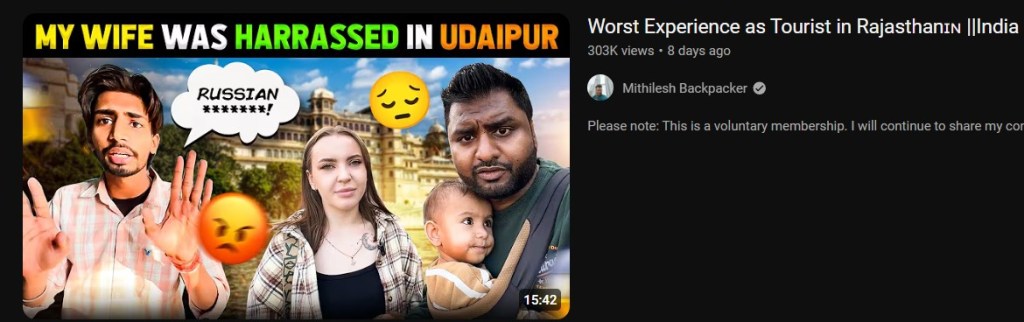
Recently, I came across a clip of an Indian vlogger who tried to confront a guy who made a passing “6000 Rupees” joke at his Russian wife. The comments section was filled with outrage, blaming a lack of education, unemployment, lower-income groups, and comedian Harsh Gujral (who popularized the joke unintentionally), along with the rise of ‘dark humor’ among teenagers online. This trend seems to have found newfound representation of their tastes in what is arguably India’s biggest show on YouTube—”India’s Got Latent.”
The format is fairly simple: a couple of contestants appear on stage and display their talents—it could be rap, poetry, singing, etc.—while the host, Samay Raina, and a couple of guests judge them and give points based on their assessments. While this is the underlying format of the show, the show’s USP is not the talents that appear on stage but the no-holds-barred approach to a reality talent show. It’s a major deviation and a big “fuck you” to the tailored, saccharine fakeness of the reality shows we see on television.
“India’s Got Latent” derives immense value from its charming host and the uncanny guests on the panel who change with every new episode —a mix of Internet celebrities and TV personalities like Deepak Kalal, Rakhi Sawant, Urfi Javed, Sid Warrier, Tanmay Bhatt, Raghu Ram, etc. Having this potpourri of personalities placed in a no-holds-barred comedy setting amidst the presence of the host is what drives the viewership. Samay Raina’s fanbase often touts him as a “Supreme Leader,” praising his fearless humor with phrases like “he didn’t hesitate” or “India is not ready for his humor.” I’ve followed his work since Comicstaan Season 2, which he won and then went on to smartly use his interest in chess to host entertaining live streams related to the game, his wit and talent for quick retorts, made him arguably India’s biggest comedian right now, at least among the Gen Z, and millennial audience who spend a considerable amount of time on social media.
I’ll admit I’ve only seen maybe one or two episodes of this show, and bits of it on reels—and that too out of FOMO. Watching this show feels like sitting with a group of friends who entertain themselves by roasting each other with sharp, sarcastic remarks. The way they take potshots at one another is where the entertainment is derived from.
The episodes that I’ve seen had the typical “Kashmiri stone-pelting jokes”, “African men must have a long penis” stereotypes, and the usual “Deepak Kalal is effeminate and horny” type of humor. It truly does feel like being in the middle of a friend group, where everyone roasts each other unapologetically. It’s an easy, breezy show one can watch without having to think too much about things—the equivalent of scrolling through your Instagram FYP with the occasional memes causing you to chuckle.
So, what’s the problem with this? There is no problem. It’s the same type of jokes you’d hear in a tight-knit friend group, now being elevated by a platform featuring professional comedians and celebrities who give it an air of credibility. The interesting thing is, these jokes of which the premises are usually built upon are existing stereotypes about cultures and its people which have been in existence since the era of boomers, it’s merely packaged differently now, in a more sophisticated way.
If you picture these comedians in their 40s or 50s, their humor doesn’t feel much different from the regressive remarks made by uncles and aunties. The key difference is that these comedians are self-aware and present their jokes in a language that resonates with Gen Z and millennials. So, in the end, you are only left feeling ‘wah, kya timing hain’—’wah kya counter diya hain’, ‘kya roast kiya hain’—but you are never really laughing in awe of what the joke is because you have already heard it in some form or the other.
Now, I firmly believe it’s stupid to censor jokes, and I don’t even agree that there should be a limit on the type of jokes one should or should not make. If there’s a willing audience for it, one should always be free to make that joke. ANY JOKE. But then again, this causes another discussion about the existence of an audience that pays to laugh at these kinds of jokes, and what does it tell about the general disposition about this audience.
However, I also do believe the artist must be sensible enough to understand the kind of audience the joke is being delivered to, and the audience must be sensible enough to understand the type of joke it is. This ideal balance between comedians and audiences rarely occurs in reality. And since the quality of the art is only as worthy as the audience deems it, the audience decides what stays relevant. The comedians will always blend and adjust according to their audience because that’s who they earn their daily bread from.
Neville Shah, who once made a joke about SC/ST reservations in medical examinations in his comedy special, now plays his part as an intellectual balance in the TISS podcasts, eschewing wisdom and wit among the banter that the podcasters/comedians share—these same comedians had previously written bits based on lazy stereotypes.
Tanmay Bhatt has happily moved on from the infamous #MeToo controversy of AIB, and is now minting money making meme reaction videos and eschews knowledge on his Youtube channel – this is the same guy who tweeted some odd intrusive thought masquerading as a joke, something about coming across naked baby pictures of women he knows of.
These guys will jump at the opportunity of appearing as a guest on India’s biggest comedy show on Youtube.
It is no surprise that the same boomer humor we’ve been hearing since ages, and cracked in schools is now being consumed as ‘dark’ humor—a term that’s been associated with a sense of exclusivity to it, a mettle to handle these proves an upmanship in your social capital among the friends group. So now, the same racist, sexist, or whatever -ist people among your circle have found a name to their behavior, which is ‘dark humor.’
Silencing a comic artist is an infringement on their freedom of speech. AIB has been an early victim of this, with their AIB roast. Comedians have long known to be pushing the boundaries with their edginess, but one can’t help but wonder, is that all that there’s to these comedians? Why is it that only the edgelords garner the most attention? Why is a dismissal of such jokes prompting such a polarizing reaction to that point that it almost becomes a badge of accomplishment? This inevitably becomes a competition of who has said the edgiest thing and gotten the most backlash.
A few months ago, some female participant on the show had made a joke about Bengalis protesting, given the recent RG Kar case. Understandably, not a lot of people were kind to this, especially considering it’s a woman making such a joke. And that led to some backlash among people—this led to two divided opinions—why can’t people take a joke? and why are people making such a joke in the first place? Some of those who defended her commended her for her audacity to make such an edgy joke. Those who were criticizing her shamed her for her insensitivity towards the current climate.
While a more productive question would’ve been, is such a joke even remotely funny in the first place? Does this deserve any bit of attention, really? Bengalis being woke and protesting has been a stereotype since decades ago—how is it even a joke? It’s merely a stereotype.
Similarly, a few more months before that – a Telugu Youtuber got cancelled, and arrested for making some joke about an innocent video of a father and his little daughter.
Celebrities, and many netizen jumped on the bandwagon of criticizing this guy, prompting legal action. Those who were defending the guy, claimed that the reaction was too extreme and it was led by ‘snowflakes’ or with celebrities with personal vendetta against him, because of his roasting videos – this inevitably also raises a question who decides who decides what is the limit for extremity? I personally believe he should have been arrested for a completely different reason – which is his lame attempt at making a joke and exposing audience to this embarassment.
While there’s no strict definition for what dark humor is, my understanding of it can be best described by this example—”if you have the ability to make a joke about a dead child in front of an audience who lost their child, and make the audience laugh at it.” That, in my opinion, is an effective ‘dark’ joke.
Because to this, you have an audience that’s willing to participate in the joke, and a joke that’s written and delivered so good that the audience who’s personally felt this misery is able to find a sense of ease in this tragedy. Evidently, that’s not the case in what we see now—somehow, a good ‘dark joke’ is also judged based on how the recipient can ‘take a joke,’ and there’s no regard whatsoever for if the joke is even funny or not.
The more uncomfortable you are with a joke, somehow, that’s how dark, and brilliant that joke is—’bro didn’t even hesitate.’ Personally, I am awkwarded out around people making ‘dark’ jokes not because I am disturbed, but I am indifferent to them, and I don’t want my nonchalance to come across as rude or haughty. So, I force a scoff and a chuckle.
At the end of the day, comedy is subjective—who’s to say who can or cannot laugh at something, and who can or cannot make a joke? But it does feel inauthentic when tired stereotypes are repackaged and sold as ‘dark humor.’ It’s been close to five years since Harsh Gujral has uploaded that clip. The stereotype about Russian sex workers has existed before Harsh Gujral and still continues to exist in the present day.
The idea about Russian women being stereotyped as sex workers still exists—sometimes flippantly, in a self-aware attempt at making a joke, and among the unaware, it exists purely as a stereotype now propagated as a meme/joke. It’s on to the audience to grow up and realize that we have been appreciating mediocrity in the name of pushing boundaries of comedy, and on a cultural level, we are just repeating the same old stereotypes we have been hearing since ages, just repackaged as ‘dark humor.’
One must not prevent artists from performing their art, but as audience, we deserve better. Instead of judging if someone can take a joke or not, one must also wonder, ki bhai ye joke bhi hain?
Manjeet Sarkar, a Dalit comedian once said on Anurag Minus Verma’s podcast – ‘India mein koi comedy dekhne ke liye nahi jata, India mein log comedian ko dekhne jaate hain’.
In another podcast Anurag said something along the lines of being perplexed by the discussion threads related to these comedians, where the audience refers to these comedians as ‘chief’, ‘Supreme Leader’ etc. which led him to wonder are these Gen Z folks in search for a ‘daddy’? ‘A male figure’ to guide them in their lives, that they don’t want to think for themselves.
Thinking along these lines, the irreverence that these comedians portray also instills a sense of superiority within the audience who unironically harbour these thoughts.
After all what is the need to think and empathize about something when one can just reduce the value to a meme and move on –
‘Russian woman – sex worker’
‘Kashmiri – stone-pelting’
‘African – dick joke’
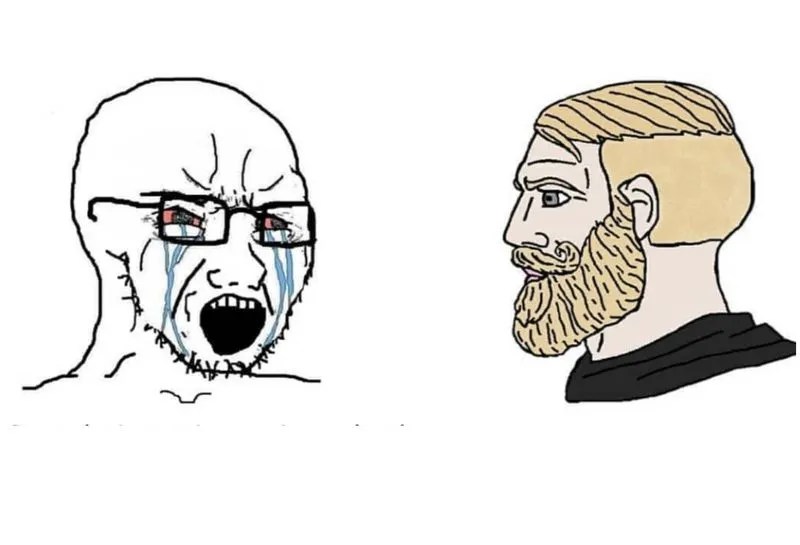
In fact, this whole write-up can also be summed up with this meme where the author (left) who’s waxing eloquence about something is casually dismissed by a surface level take by the one on the right:
With this growing indifference and apathy among the current happenings of the world, anti-intellectuialism must not thrive with the kind of popularity it enjoys. It is a whole different discussion if a large section of the audience consuming these jokes were well-aware and educated, but then again, an incident like with the Indian vlogger wouldn’t have occured, and the transformation of such a trite stereotype turning into a popular meme wouldn’t have happened in the first place. If you are a fan of dark humour, it is also onto you to expect better from your favorite comedians.
The problem isn’t even the likes of shows like India’s Got Latent, or comedians like Samay Raina, Harsh Gujral etc. the problem solely lies with the regressive audience that consumes it, and touts it as something of immense value – if it doesn’t entertain the audience anymore they will move on to different things.
I have long been a fan of dark humor, but what this current mainstream nature of this sub-genre has become is just plain stupidity. Call me elitist if you want, but it is what it is. It’s embarassing to even claim you enjoy dark humour at this point, considering how it has been associated with regressive ideas and an audience that refuses to think for themselves.
Every one around is you passing some comments or quips in the name of ‘dark humour’, there is no novelty to it anymore. Apathy is the norm, sympathy and empathy makes you look stupid.
It’s not that India is not ready for this humor – India has always been making this humour, just that it’s gotten a cooler, westernized packaging now.
I’ve written ‘Most intriguing things’ instead of ‘best of’ because I’m not entirely sure how to encapsulate my feelings toward some of the films on this list. A few of the films I’ve watched seem abysmal on many levels, yet they still hold some value for me.
This isn’t a Best of 2024 list, mainly because I haven’t seen every film released this year. It doesn’t make sense to me to label certain films as the best without having watched every single one of them. I’ve been somewhat selective about what I chose to watch this year, so a couple of big releases have been skipped.
I’ve watched a total of 80 films this year, and I’ve curated a list of 30 films that have managed to stay with me in one way or another.
This list is in a particular order.
30. Swag (Telugu)
The premise of Swag is complex—it’s a family drama about a feud between generations regarding the true heir to a huge inheritance. Riddled within this is a satirical mix of battle of genders and themes surrounding matriarchy, patriarchy, and greed. The primary actors in this film take on the roles of multiple characters whose stories span generations, most of which overlap. The lead actor, Sree Vishnu, dons the roles of a retired policeman, a king, a middle-aged family man, a trans person, and a good-for-nothing college grad. Think of something like Netflix’s Dark or David Mitchell’s Cloud Atlas for reference.
Given the immense scope of the story, this could even make for a solid mini-series. Watching this was a fascinating experience for me—not just because of the themes it explored but also how it was significantly limited by its own storytelling language. The entire story gets wrapped up in two and a half hours. The film adopts a rather conventional masala approach, ladled with goofy characterizations, exposition-heavy dialogues, and trite drama, ultimately resulting in a sermon-heavy climax.
While the intention behind this film is noble and its scope is wondrous, in an effort to connect with every sect of the audience, the storytelling language is adapted to be accessible to everyone (some of the world-building elements work – for ex: Swag-comes from Swaganika, and the family symbol is a rock-hand sign. The bits depicting matriarchial rule have men hiding their faces with a veil). However, in the process of keeping things light-hearted, it ends up doing a disservice to the story and its characters.
In some ways, it reminded me of last year’s controversial Baby by Sai Rajesh Neelam. The premise of that film had great potential to flesh out a solid triangle romance-thriller delving into the psyche of its three leads—exploring themes like class, power structures in gender dynamics, and peer pressure. Instead, it ended up becoming a trash romance drama with ethically questionable editing and imagery choices.
29. Rifle Club (Malayalam)
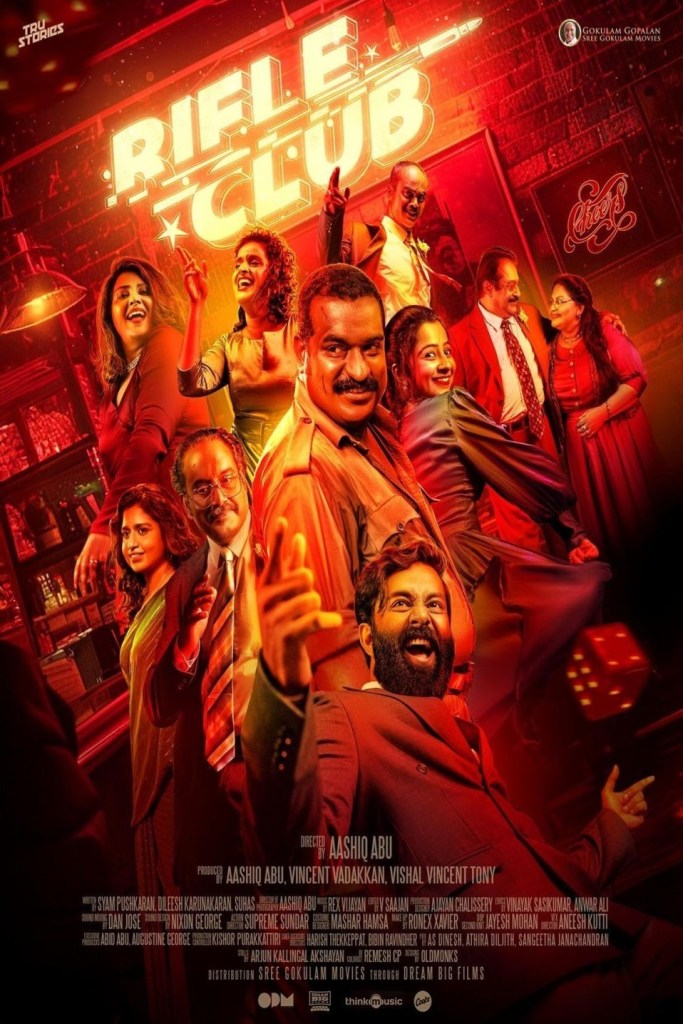
Going into this, I had no expectations and was half-sure I wouldn’t find much to enjoy in the film. But my low expectations actually helped me enjoy it at least until the first half—the retro aesthetic, set pieces, tacky dialogues, quirky characters, Hanumankind’s bad imitation of a spoiled brat, and a wacko Anurag Kashyap trying to be a menacing weapons dealer—all added to its charm in an odd way.
However, the intrigue with this film doesn’t last. As it moves toward the ultimate showdown with its shootout sequences, it stopped being all that interesting. Maybe if the sequences were better choreographed and shot, it could have been something else entirely. The plot conveniences also get far too comfortable within its world for my liking.
More than the shootout sequences, I found myself interested in the lore behind the members of the Rifle Club – it was like reading a pulp-fiction novel.
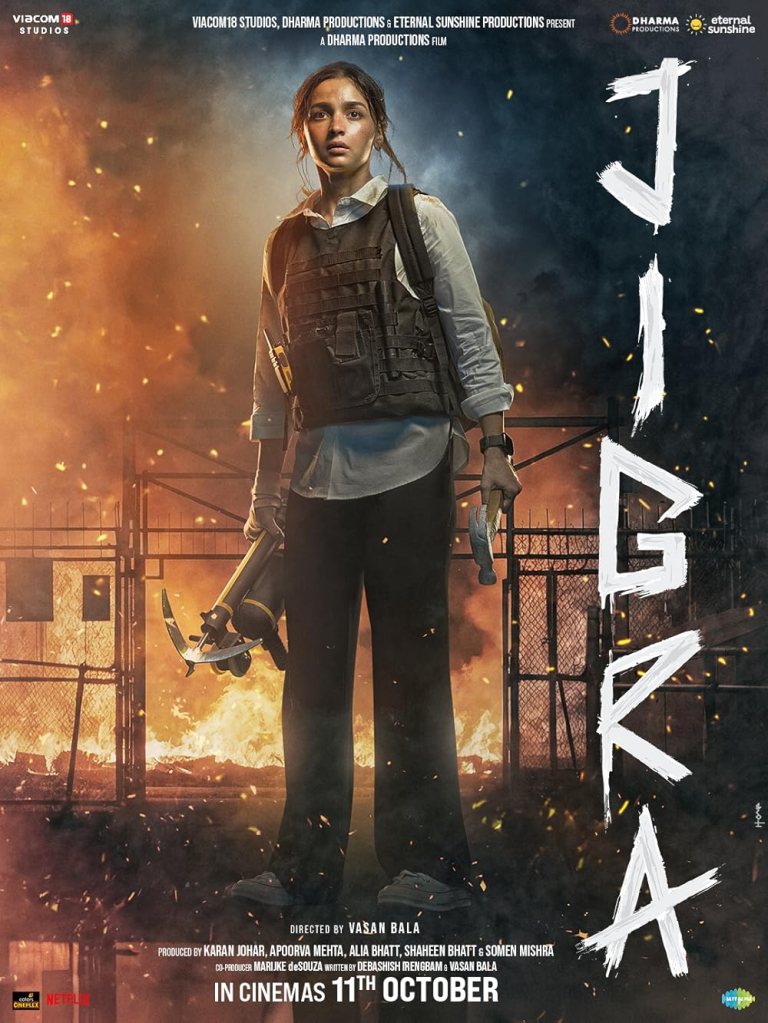
28. Jigra (Hindi)
Director Vasan Bala’s Jigra is such an exciting idea on paper. In the fictional country of Hanshi Dao, a young man gets wrongly implicated in a drug case and arrested, prompting his sister to attempt a daring jailbreak. This fictional country boasts unique architecture, bureaucracy, and festivals. The style and production quality of the film are effective—the aesthetics are superb, with vibrant colors, stylish transitions, and top-notch music.
However, the film heavily falters in the latter half. The stunts become uninteresting, the plot holes grow glaring, and by the end of it, I didn’t really care whether these siblings made it out alive or not. I’m not sure what went wrong. Was it the acting? The lukewarm writing? Or the plot holes? I can’t quite put my finger on it.
That said, it definitely left me thinking about some sequences in this film, which makes it far from forgettable.
Special mention to Vivek Gomber, who plays the jailer— OIC Hans Landa (an obv. reference to Inglorious Basterds). He absolutely aces his role as a menacing officer, though I did find it a little difficult to look past his naturally kind-looking face.
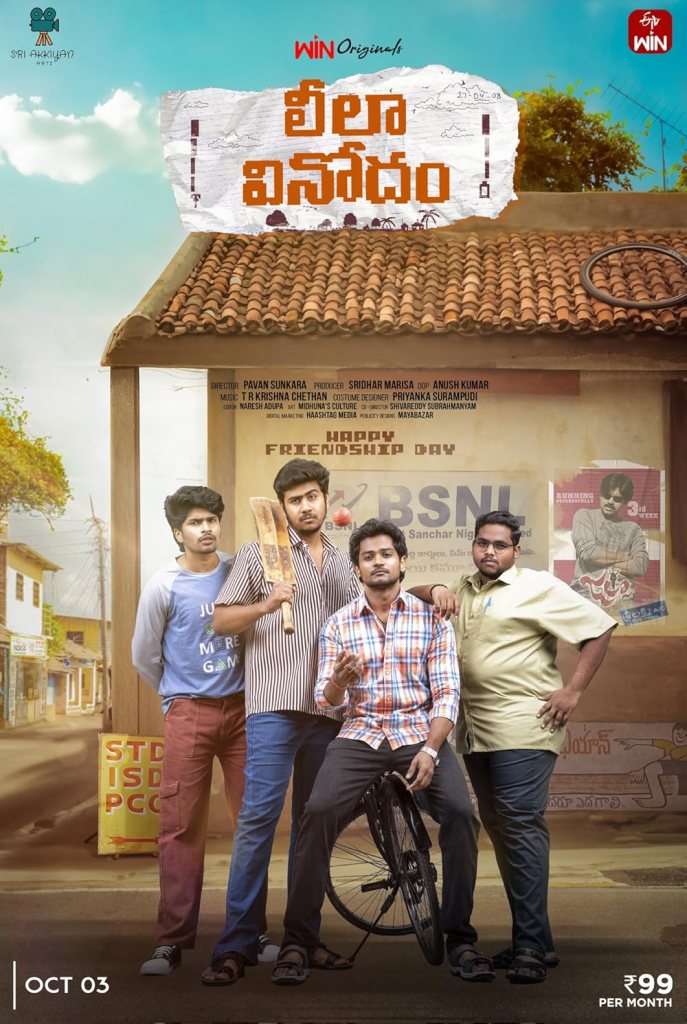
27. Leela Vinodam (Telugu)
Nothing frustrates me more than a bad film made out of a good logline—Leela Vinodam is simple. A love story set in a small village—a boy falls in love with a girl. As their romance blooms through text messages, he confesses his feelings over a text. While waiting for her response, his mind spirals through a myriad of scenarios, overthinking every possibility. To help him cope with his anxieties, his friends tag along throughout the day.
A concept like this could’ve made for some amazing surreal humor, paired with an unconventional style to depict a budding romance and a buddy-comedy film.
While that’s what it sets out to do, it severely stumbles—thanks to an absolutely uninspiring protagonist and a complete lack of chemistry between the two leads. The atrocious acting by the lead actor doesn’t help either.
And like a lot of Indian films in this genre, the side characters are far more interesting and fun than the protagonist. There’s nothing remotely compelling about him—his only personality traits are being kind-hearted and stupidly in love. This film takes it up a notch by having the protagonist literally declare how awkward, nervous, and self-absorbed he is in his misery—and yet, the love interest responds positively to him regardless.
For a country that has endlessly used romance as a theme in mainstream cinema, it’s surprising how rarely chemistry is done right. But I digress. Coming back to the film—the logline and its absolute butchering left me feeling frustrated. One can only imagine the potential of a solid logline like this.
26. The Goat Life (Malayalam)
After reading the book, the movie adaptation feels severely tamed in comparison to what the book depicts. While Prithviraj delivered a solid performance and the film was technically well-shot, it ultimately felt like a disjointed mess. There was no need to show so much of Najeeb’s life with his wife, and there was absolutely no need for that awkward sensual song in the pond.
The film excels whenever it sticks to the source material, as the source material itself is so heavy. Ironically, you never quite feel The Goat Life aspect of this film, whereas the book heavily deals with the idea of Najeeb’s meaningless existence being stripped of every sense of humanness and reduced to that of a goat.
The closest the film comes to capturing this is in its opening sequence, where you see a ragged and destitute Najeeb drinking water out of a container meant for goats. This also happens to be the film’s most striking moment—one that perfectly aligns with the source material and complements it.
I keep thinking about this film wondering what could’ve been.
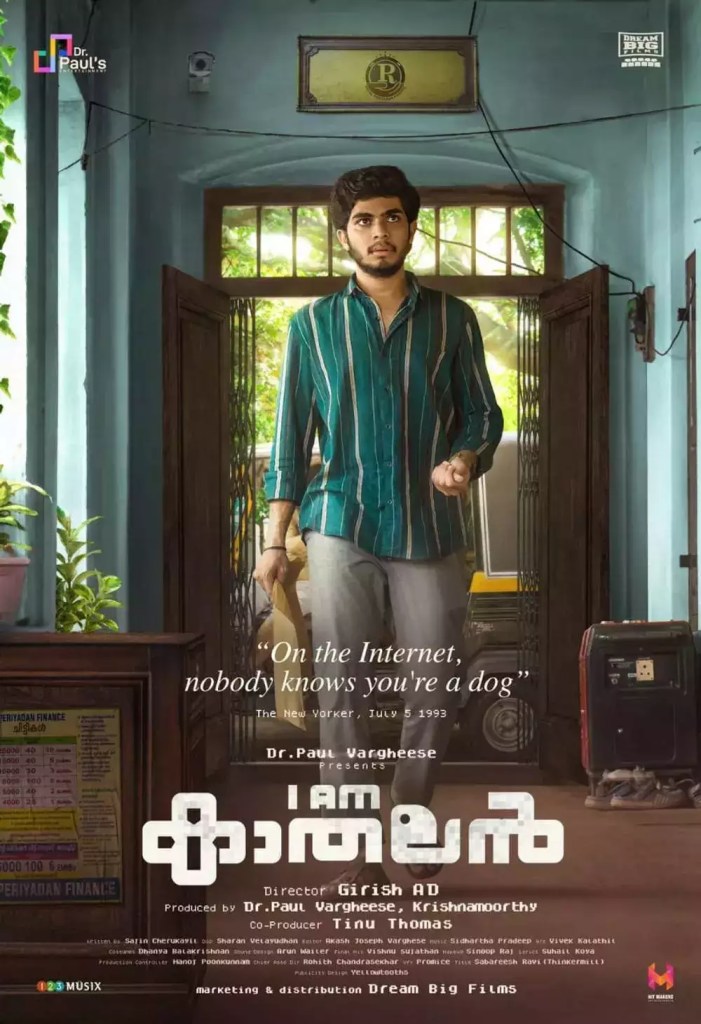
25. I am Kathalan (Malayalam)
After Girish AD’s blockbuster Premalu earlier this year, another low-key film of his released—shot before Premalu. This film deviates from the typical coming-of-age comedy genre that the director usually sticks to and instead ventures into the techno-crime thriller space.
Now, hearing the words techno-crime thriller, one might picture characters in hoodies, big corporate buildings, green text flashing on laptops, and whatnot—but the scope of this film is surprisingly grounded. The underlying conflict that drives the antagonist is also rooted in this world. After facing humiliation from his girlfriend’s father, he decides to seek revenge by hacking into the servers of her father’s small firm.
The protagonist’s opponent—an ethical hacker—isn’t your typical laidback, cool hacker stereotype either. She’s a corporate employee with a husband and a baby, adding an unexpected layer of realism.
I Am Kathalan is a good-enough film, which got me wondering why we don’t see more of these good-enough films on the big screen anymore. Most big-screen releases these days are either massive in scope or blatant sequel-baits. After all, why must every film be a large, soul-stirring, adrenaline-fueled experience? Can’t a film just be good enough?
The modest nature of this film’s world stayed with me.
From 24th to 20th, the list is in no particular order.
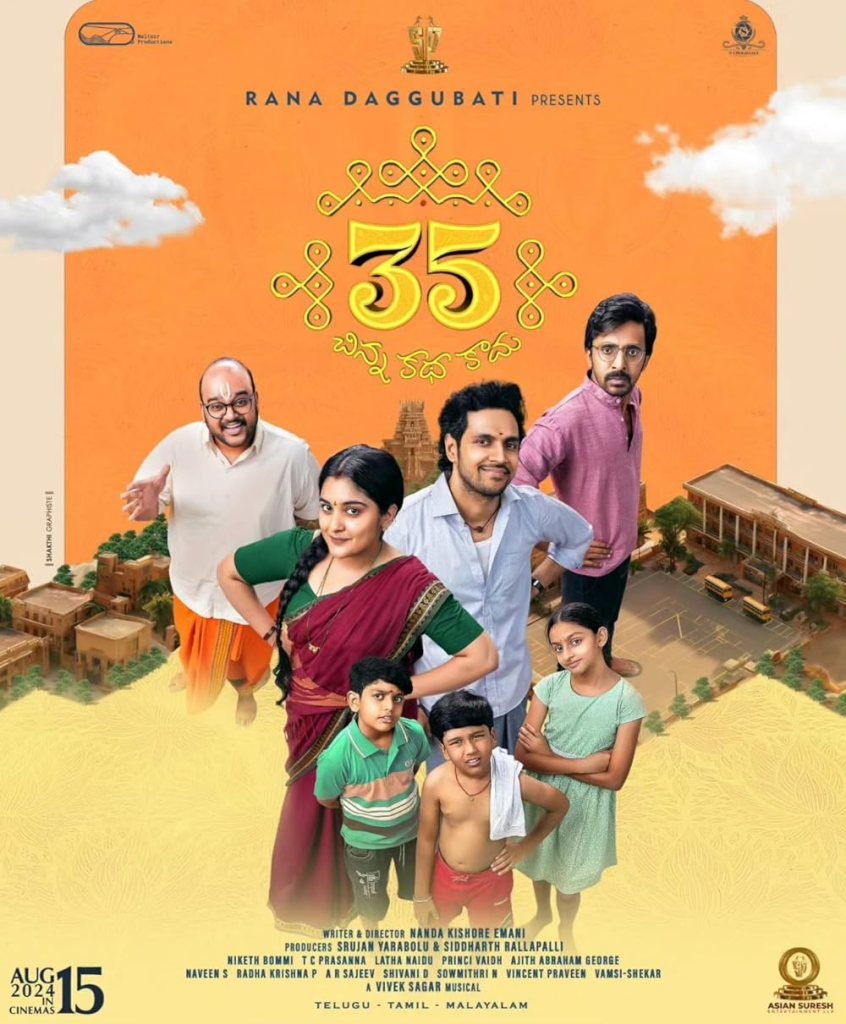
24. 35 – Chinna Katha Kaadhu (Telugu)
35 is about a lot of things, but the primary thread of the story revolves around a young couple’s son who struggles to grasp Mathematics at school—and how this problem seeps into his personal life, affecting his parents and the dynamics of their relationship.
There are some wonderful bits in this film. Take, for example, the reason the kid can’t seem to grasp Mathematics—he struggles with its very fundamentals. At one point, he exclaims, “When 0 has no value, why does the value of 1 increase when a zero is placed next to it?” A dilemma like this can’t be solved unless it’s handled by a truly dedicated teacher who is willing to look at the world througha a child’s perspective. Unfortunately, like most Mathematics teachers, his teacher dismisses his questions as mere excuses for stupidity.
The conflicts in this film keep growing as the child becomes increasingly alienated from his school environment, beaten down by callousness and disrespect. This, in turn, impacts his behavior at home, creating ripples in the parents’ relationship as well.
The savior of the day ends up being the mother, Saraswati, played by a superb Nivetha Thomas. Her performance in this film felt so effortless that I had to pause and check if the actress had any Telugu roots. This has to be one of the best performances of the year—one of those cases where a good film is elevated significantly by a great performance.
While there’s more to this film than what a single paragraph can contain, what stood out as an odd thing to me was the character of the child’s father—Saraswati’s husband. His character traits are regressive and reek of patriarchal values—not the outright villainous kind, but the ‘soft’ kind that are often shrugged off as old values. The film doesn’t condone his actions, nor does it criticize them. Instead,the film merely attempts to depict a stereotypical traditional Brahmin Telugu household as authentically as possible.
Seeing his regressive ideas—wrapped up in the film’s aesthetic colors and polished set pieces—felt downright surreal. It made me wonder—could this film have done with a little less focus on aesthetics? Do frames, colors, and shots always need to look pretty?
To be fair, the story of this film is great – but a more coherent direction work could have made it a far more accessible film than it actually is.
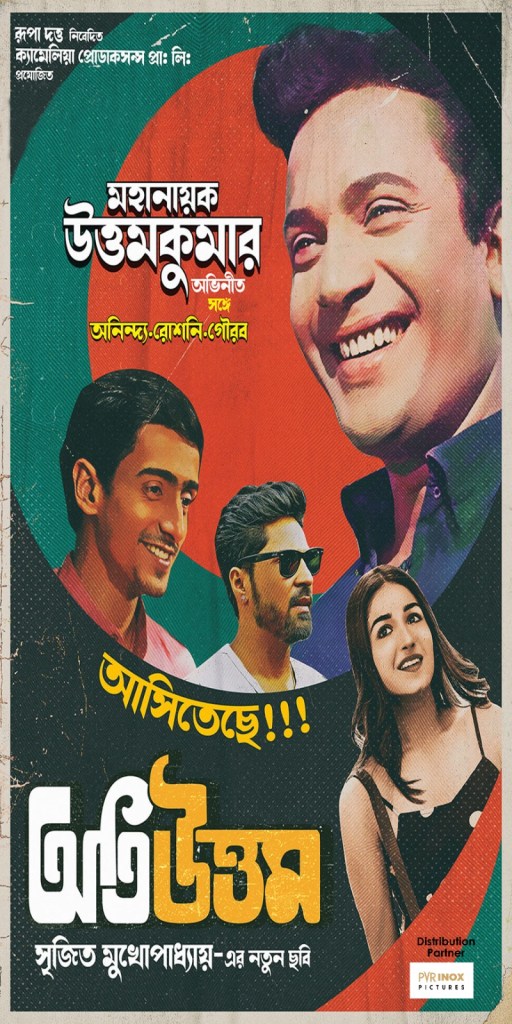
23. Oti Uttam (Bengali)
Another painful case of wasted potential. If you aren’t aware of this film, here’s the logline—A PhD student researching Bengali cinema legend Uttam Kumar falls in love with a girl but struggles to win her heart. So, he summons the ghost of Uttam Kumar to help him woo her.
Uttam Kumar’s presence in this film is constructed entirely through frames taken from his filmography. This means the screenplay and the actors’ performances had to be built around pre-existing dialogues and framed within the limits of Uttam Kumar’s cinematic legacy.
The very idea of this film evokes excitement, but considering it’s Srijit Mukherjee behind the direction, the treatment has been—unsurprisingly—disappointing. My knowledge of Bengali cinema is mostly limited to a couple of Satyajit Ray films and Srijit Mukherjee’s works. And what I’ve noticed in Srijit’s filmography so far is that, while the ideas he works with are incredibly exciting, their execution often leans toward a very mainstream Bollywood-like approach—which isn’t inherently good or bad but feels immensely limiting to the potential of concepts like this one.
For instance, many character conflicts in this film are resolved with speeches. The protagonist is more or less a bumbling idiot in love, while the love interest is a typical modern woman in her 20s who wants a charming man to sweep her off her feet. Most of the obstacles they face are resolved when an elder shares an anecdote, Uttam Kumar quotes one of his legendary dialogues, or someone delivers a motivational quip. For a concept like this, a treatment like that is frustrating.
Guess what’s even more frustrating? The film includes a fascinating nod—Uttam Kumar’s ghost is summoned with the help of the protagonist’s sidekick friend, who is played by the real-life grandson of Uttam Kumar. And yet, this intriguing detail leads nowhere. The grandson is reduced to nothing more than the goofy sidekick of an idiot protagonist in love.
That said, for all its faults, there’s one beautiful stretch in the second half where Uttam Kumar’s ghost is taken on a stroll around the city. He visits old film sets, looks at posters of his movies, and stops by some memorials.
Weirdly enough, this film reminded me of SRK’s Fan—yet another case of a logline with immense potential for satire, and meta-commentary wasted on sub-par treatment.
22. The Night of the Hunter (English)
Now regarded as one of the greatest films ever made, The Night of the Hunter was critically panned upon its release. Yet, nearly 70 years later, its eerie aesthetic still manages to unnerve audiences. Blurring the lines between a children’s fable, a stalker thriller, and even a Christmas tale, it creates a dreamlike sense of dread. Robert Mitchum’s haunting performance as the sinister preacher lingers long.
There’s something about the blending of genres that always intrigues me—Indian filmmakers have blended multiple genres and carved a language of storytelling (masala) that’s accessible to the maximum set of audience. One can only hope for a new wave of cinematic language that echoes a new set of themes as opposed to the tropes we’ve been seeing since the 70s—Malayalam cinema has shown promise in this regard. Till some extent, SRV’s Animal does that as well (don’t kill me for this!).
In 2022, we’d seen Rajamouli cross boundaries with a film that blends alternate history with peak masala and mass storytelling. We’re yet to see what the future holds, but here’s hoping it’s something exciting.
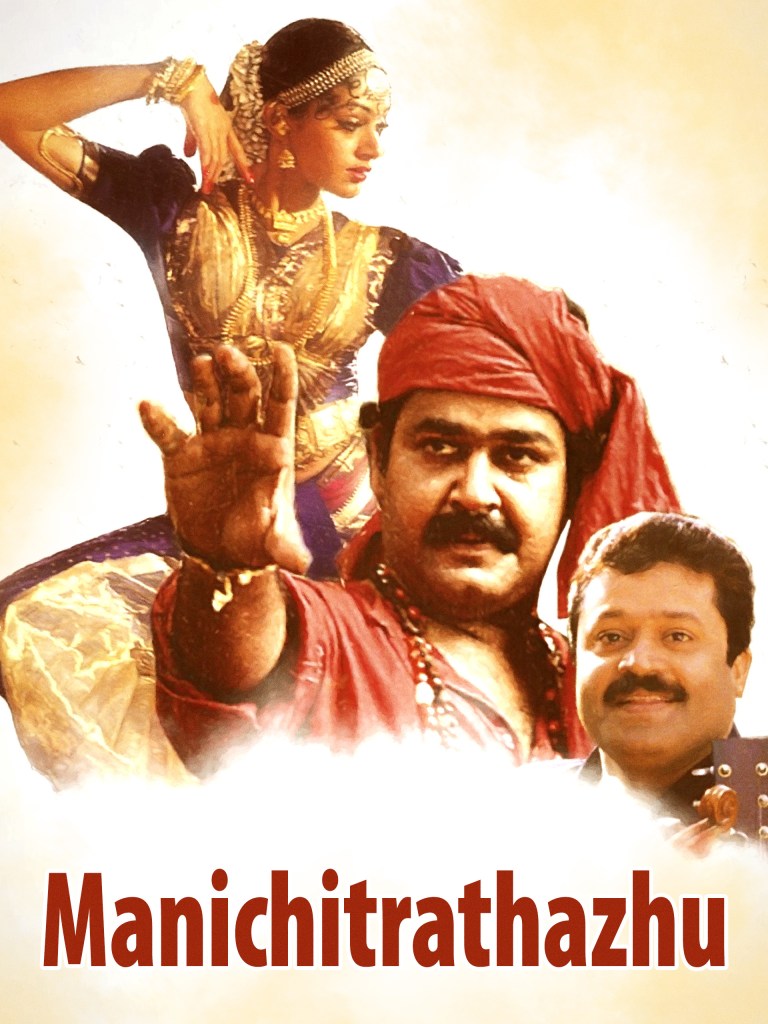
21. Manichitrathazhu (Malayalam)
I had seen Fazil’s Manichitrathazhu a couple of times before. While I could appreciate it when provided with the appropriate history and context of the film, I could never see it beyond that. This is partly because I had already seen the remade versions—Chandramukhi and Bhool Bhulayya—and call me uncultured, but I enjoyed them.
While it’s glaringly evident that Manichitrathazhu is still a far superior version, my vision was too jaded to viscerally understand why the remade versions are hated so much. Every industry has its own set of audiences to cater to, so liberties with the tone of narration have been taken accordingly.
It was only after I happened to catch a re-release this year that I felt more immersed in the film. It was a night show, and Sobhana’s performance was so unnerving that it stayed with me until I reached home. I was half-fearing a screaming Shobhana dancing and running toward me in the middle of the night.
It was finally pleasing to viscerally experience the fear this film evokes and to witness Shobana’s captivating performance on the big screen. It made me realize just how much watching any film in a theater can significantly change the type of impact it leaves on you.
20. Goopy Gyne Baagha Byne (Bengali)
I had always heard about Goopy Gyne Bagha Byne being a cult classic, but I’ll admit—I didn’t rush to watch it. Maybe it was the idea of a musical fantasy film meant for kids that made me feel like it wouldn’t resonate with me, especially considering the time period it was released in.
For a film that came out in 1969, it still manages to retain a certain charm—particularly the elaborate 10-minute dance sequence by ghostly figures meant to represent the class divide in society. It’s equal parts eerie and beautiful.
Apart from this, the premise is fairly simple—it’s a whimsical story about two misfits—a tone-deaf singer and a terrible drummer—who gain magical powers and end up saving kingdoms. But beneath the charm, it’s also about greed, war, and power struggles, all disguised as a children’s fable.
That said, it’s not a flawless film. A lot of it doesn’t quite land with the same impact in the present day. Some parts feel slow, and the musical and fantastical elements might not work for everyone—especially for a non-Bengali like me.
Perhaps my fascination with this film has more to do with the fact that it’s Satyajit Ray’s—the same man who gave us Pratidwani, Kapurush, Nayak, and Aranyer Din Ratri.
As I began writing this article, I realized it’s going to be an extremely long one. Honestly, I’m not even sure if anyone is going to read it. But I decided to finish it anyway—mainly to get back into the habit of writing.
To keep things manageable, I’ve divided it into three parts.






 A notebook.