I’ve written ‘Most intriguing things’ instead of ‘best of’ because I’m not entirely sure how to encapsulate my feelings toward some of the films on this list. A few of the films I’ve watched seem abysmal on many levels, yet they still hold some value for me.
This isn’t a Best of 2024 list, mainly because I haven’t seen every film released this year. It doesn’t make sense to me to label certain films as the best without having watched every single one of them. I’ve been somewhat selective about what I chose to watch this year, so a couple of big releases have been skipped.
I’ve watched a total of 80 films this year, and I’ve curated a list of 30 films that have managed to stay with me in one way or another.
This list is in a particular order.
30. Swag (Telugu)

The premise of Swag is complex—it’s a family drama about a feud between generations regarding the true heir to a huge inheritance. Riddled within this is a satirical mix of battle of genders and themes surrounding matriarchy, patriarchy, and greed. The primary actors in this film take on the roles of multiple characters whose stories span generations, most of which overlap. The lead actor, Sree Vishnu, dons the roles of a retired policeman, a king, a middle-aged family man, a trans person, and a good-for-nothing college grad. Think of something like Netflix’s Dark or David Mitchell’s Cloud Atlas for reference.
Given the immense scope of the story, this could even make for a solid mini-series. Watching this was a fascinating experience for me—not just because of the themes it explored but also how it was significantly limited by its own storytelling language. The entire story gets wrapped up in two and a half hours. The film adopts a rather conventional masala approach, ladled with goofy characterizations, exposition-heavy dialogues, and trite drama, ultimately resulting in a sermon-heavy climax.
While the intention behind this film is noble and its scope is wondrous, in an effort to connect with every sect of the audience, the storytelling language is adapted to be accessible to everyone (some of the world-building elements work – for ex: Swag-comes from Swaganika, and the family symbol is a rock-hand sign. The bits depicting matriarchial rule have men hiding their faces with a veil). However, in the process of keeping things light-hearted, it ends up doing a disservice to the story and its characters.
In some ways, it reminded me of last year’s controversial Baby by Sai Rajesh Neelam. The premise of that film had great potential to flesh out a solid triangle romance-thriller delving into the psyche of its three leads—exploring themes like class, power structures in gender dynamics, and peer pressure. Instead, it ended up becoming a trash romance drama with ethically questionable editing and imagery choices.
29. Rifle Club (Malayalam)
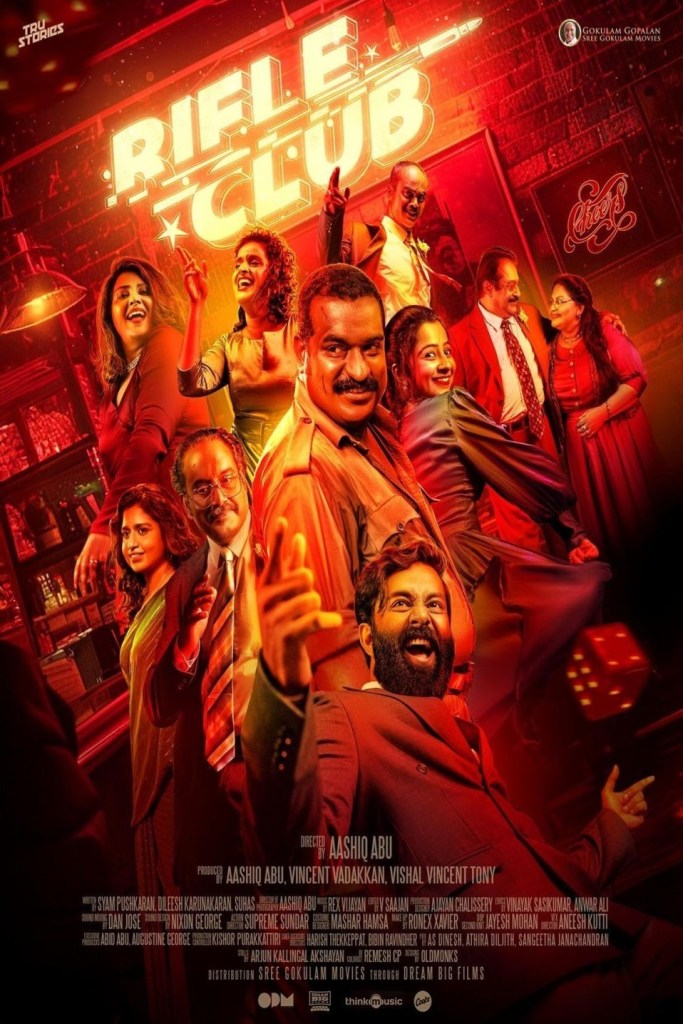
Going into this, I had no expectations and was half-sure I wouldn’t find much to enjoy in the film. But my low expectations actually helped me enjoy it at least until the first half—the retro aesthetic, set pieces, tacky dialogues, quirky characters, Hanumankind’s bad imitation of a spoiled brat, and a wacko Anurag Kashyap trying to be a menacing weapons dealer—all added to its charm in an odd way.
However, the intrigue with this film doesn’t last. As it moves toward the ultimate showdown with its shootout sequences, it stopped being all that interesting. Maybe if the sequences were better choreographed and shot, it could have been something else entirely. The plot conveniences also get far too comfortable within its world for my liking.
More than the shootout sequences, I found myself interested in the lore behind the members of the Rifle Club – it was like reading a pulp-fiction novel.
28. Jigra (Hindi)
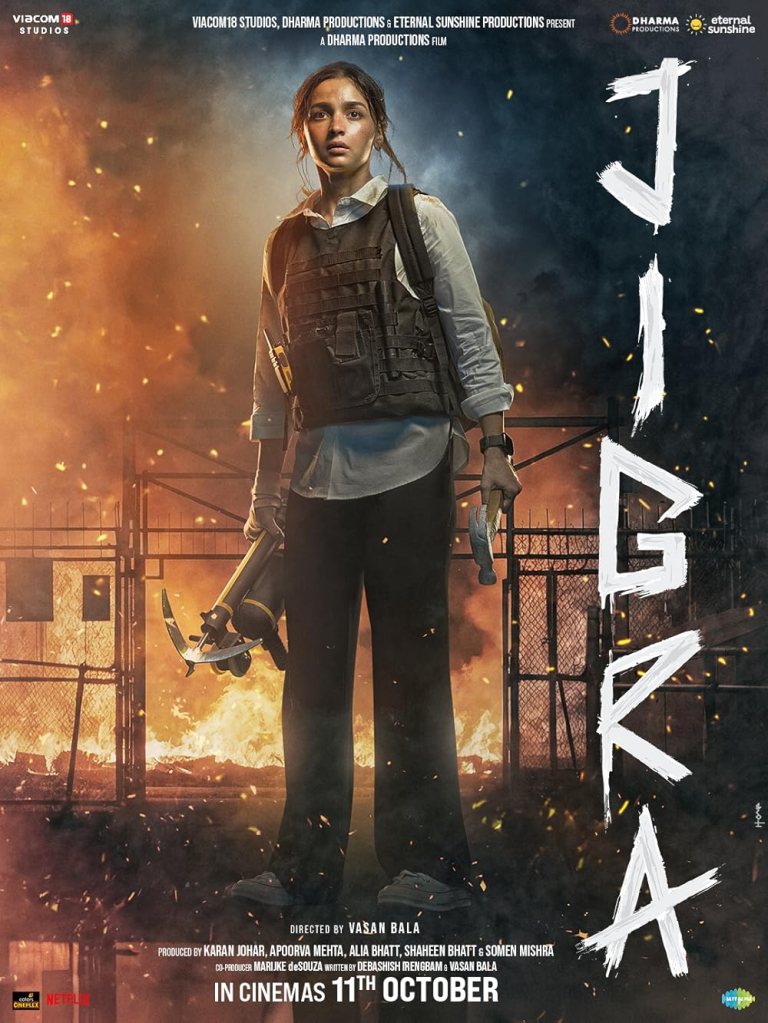
Director Vasan Bala’s Jigra is such an exciting idea on paper. In the fictional country of Hanshi Dao, a young man gets wrongly implicated in a drug case and arrested, prompting his sister to attempt a daring jailbreak. This fictional country boasts unique architecture, bureaucracy, and festivals. The style and production quality of the film are effective—the aesthetics are superb, with vibrant colors, stylish transitions, and top-notch music.
However, the film heavily falters in the latter half. The stunts become uninteresting, the plot holes grow glaring, and by the end of it, I didn’t really care whether these siblings made it out alive or not. I’m not sure what went wrong. Was it the acting? The lukewarm writing? Or the plot holes? I can’t quite put my finger on it.
That said, it definitely left me thinking about some sequences in this film, which makes it far from forgettable.
Special mention to Vivek Gomber, who plays the jailer— OIC Hans Landa (an obv. reference to Inglorious Basterds). He absolutely aces his role as a menacing officer, though I did find it a little difficult to look past his naturally kind-looking face.
27. Leela Vinodam (Telugu)
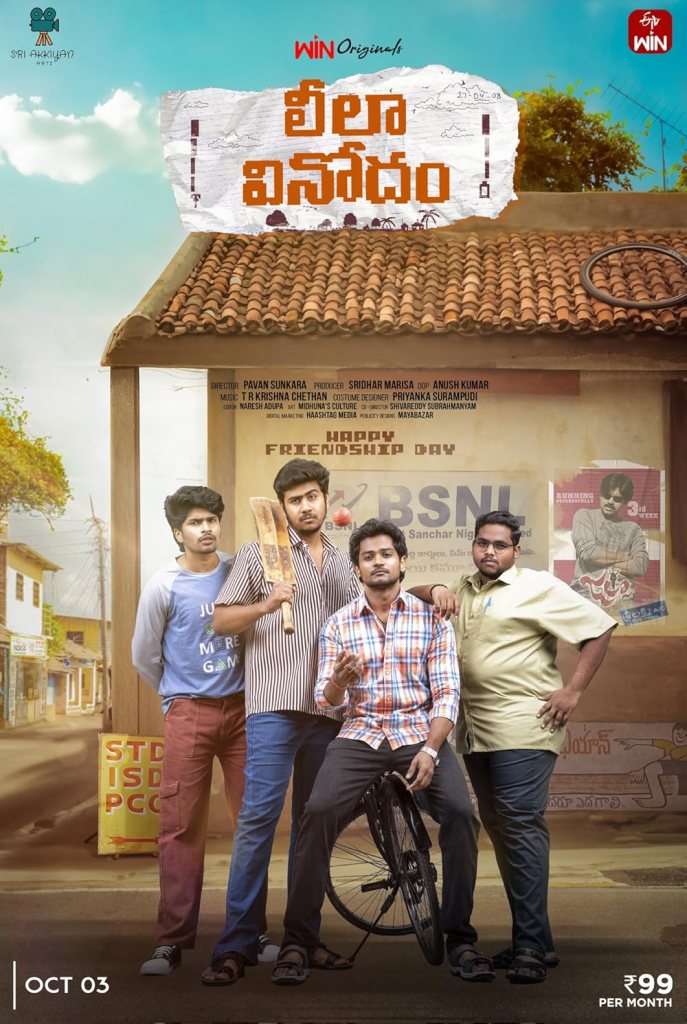
Nothing frustrates me more than a bad film made out of a good logline—Leela Vinodam is simple. A love story set in a small village—a boy falls in love with a girl. As their romance blooms through text messages, he confesses his feelings over a text. While waiting for her response, his mind spirals through a myriad of scenarios, overthinking every possibility. To help him cope with his anxieties, his friends tag along throughout the day.
A concept like this could’ve made for some amazing surreal humor, paired with an unconventional style to depict a budding romance and a buddy-comedy film.
While that’s what it sets out to do, it severely stumbles—thanks to an absolutely uninspiring protagonist and a complete lack of chemistry between the two leads. The atrocious acting by the lead actor doesn’t help either.
And like a lot of Indian films in this genre, the side characters are far more interesting and fun than the protagonist. There’s nothing remotely compelling about him—his only personality traits are being kind-hearted and stupidly in love. This film takes it up a notch by having the protagonist literally declare how awkward, nervous, and self-absorbed he is in his misery—and yet, the love interest responds positively to him regardless.
For a country that has endlessly used romance as a theme in mainstream cinema, it’s surprising how rarely chemistry is done right. But I digress. Coming back to the film—the logline and its absolute butchering left me feeling frustrated. One can only imagine the potential of a solid logline like this.
26. The Goat Life (Malayalam)

After reading the book, the movie adaptation feels severely tamed in comparison to what the book depicts. While Prithviraj delivered a solid performance and the film was technically well-shot, it ultimately felt like a disjointed mess. There was no need to show so much of Najeeb’s life with his wife, and there was absolutely no need for that awkward sensual song in the pond.
The film excels whenever it sticks to the source material, as the source material itself is so heavy. Ironically, you never quite feel The Goat Life aspect of this film, whereas the book heavily deals with the idea of Najeeb’s meaningless existence being stripped of every sense of humanness and reduced to that of a goat.
The closest the film comes to capturing this is in its opening sequence, where you see a ragged and destitute Najeeb drinking water out of a container meant for goats. This also happens to be the film’s most striking moment—one that perfectly aligns with the source material and complements it.
I keep thinking about this film wondering what could’ve been.
25. I am Kathalan (Malayalam)
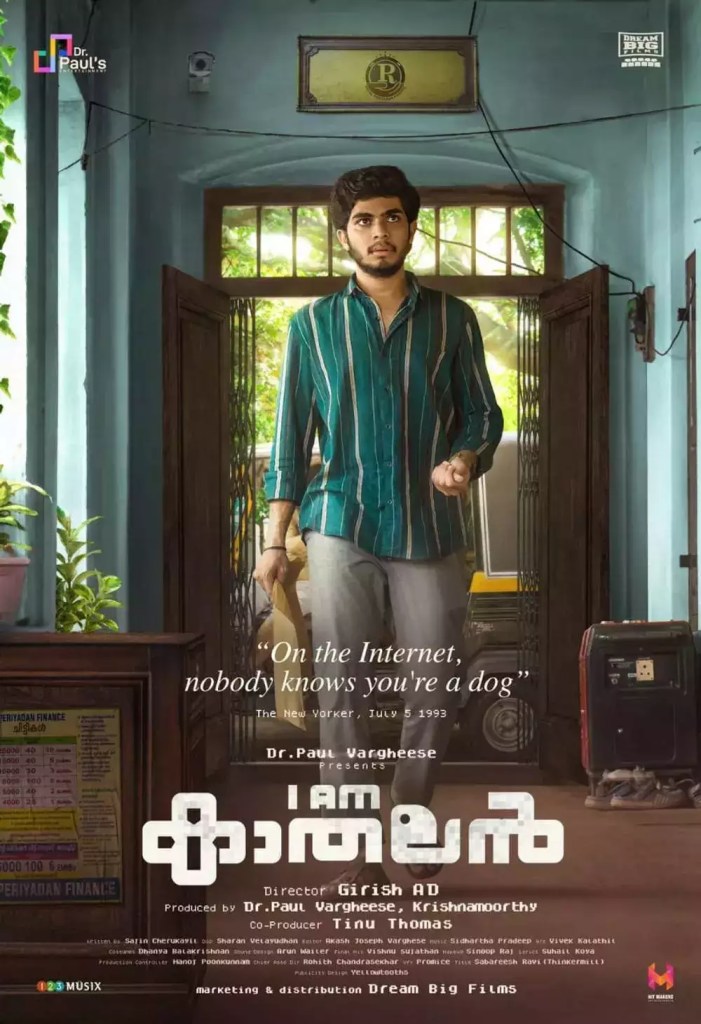
After Girish AD’s blockbuster Premalu earlier this year, another low-key film of his released—shot before Premalu. This film deviates from the typical coming-of-age comedy genre that the director usually sticks to and instead ventures into the techno-crime thriller space.
Now, hearing the words techno-crime thriller, one might picture characters in hoodies, big corporate buildings, green text flashing on laptops, and whatnot—but the scope of this film is surprisingly grounded. The underlying conflict that drives the antagonist is also rooted in this world. After facing humiliation from his girlfriend’s father, he decides to seek revenge by hacking into the servers of her father’s small firm.
The protagonist’s opponent—an ethical hacker—isn’t your typical laidback, cool hacker stereotype either. She’s a corporate employee with a husband and a baby, adding an unexpected layer of realism.
I Am Kathalan is a good-enough film, which got me wondering why we don’t see more of these good-enough films on the big screen anymore. Most big-screen releases these days are either massive in scope or blatant sequel-baits. After all, why must every film be a large, soul-stirring, adrenaline-fueled experience? Can’t a film just be good enough?
The modest nature of this film’s world stayed with me.
From 24th to 20th, the list is in no particular order.
24. 35 – Chinna Katha Kaadhu (Telugu)
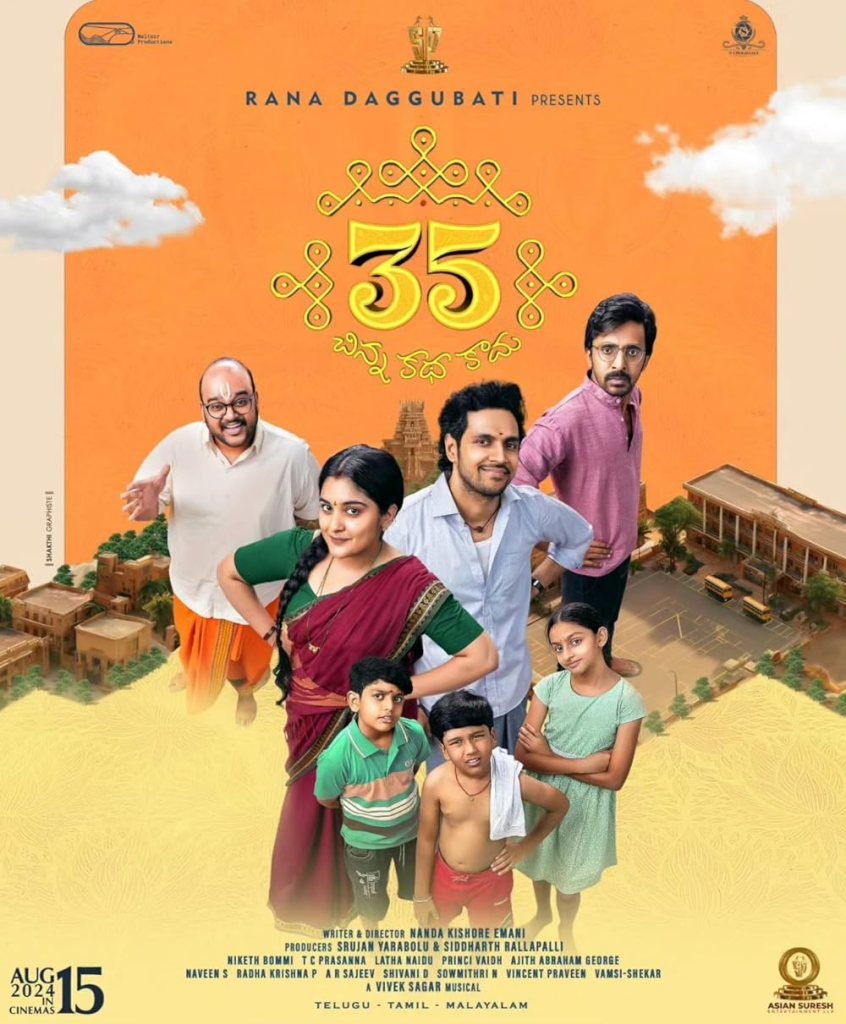
35 is about a lot of things, but the primary thread of the story revolves around a young couple’s son who struggles to grasp Mathematics at school—and how this problem seeps into his personal life, affecting his parents and the dynamics of their relationship.
There are some wonderful bits in this film. Take, for example, the reason the kid can’t seem to grasp Mathematics—he struggles with its very fundamentals. At one point, he exclaims, “When 0 has no value, why does the value of 1 increase when a zero is placed next to it?” A dilemma like this can’t be solved unless it’s handled by a truly dedicated teacher who is willing to look at the world througha a child’s perspective. Unfortunately, like most Mathematics teachers, his teacher dismisses his questions as mere excuses for stupidity.
The conflicts in this film keep growing as the child becomes increasingly alienated from his school environment, beaten down by callousness and disrespect. This, in turn, impacts his behavior at home, creating ripples in the parents’ relationship as well.
The savior of the day ends up being the mother, Saraswati, played by a superb Nivetha Thomas. Her performance in this film felt so effortless that I had to pause and check if the actress had any Telugu roots. This has to be one of the best performances of the year—one of those cases where a good film is elevated significantly by a great performance.
While there’s more to this film than what a single paragraph can contain, what stood out as an odd thing to me was the character of the child’s father—Saraswati’s husband. His character traits are regressive and reek of patriarchal values—not the outright villainous kind, but the ‘soft’ kind that are often shrugged off as old values. The film doesn’t condone his actions, nor does it criticize them. Instead,the film merely attempts to depict a stereotypical traditional Brahmin Telugu household as authentically as possible.
Seeing his regressive ideas—wrapped up in the film’s aesthetic colors and polished set pieces—felt downright surreal. It made me wonder—could this film have done with a little less focus on aesthetics? Do frames, colors, and shots always need to look pretty?
To be fair, the story of this film is great – but a more coherent direction work could have made it a far more accessible film than it actually is.
23. Oti Uttam (Bengali)
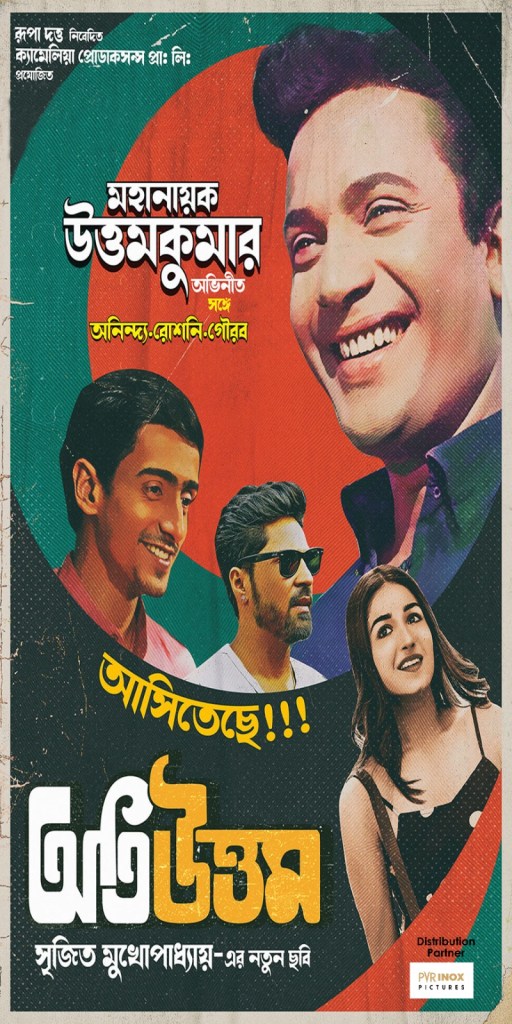
Another painful case of wasted potential. If you aren’t aware of this film, here’s the logline—A PhD student researching Bengali cinema legend Uttam Kumar falls in love with a girl but struggles to win her heart. So, he summons the ghost of Uttam Kumar to help him woo her.
Uttam Kumar’s presence in this film is constructed entirely through frames taken from his filmography. This means the screenplay and the actors’ performances had to be built around pre-existing dialogues and framed within the limits of Uttam Kumar’s cinematic legacy.
The very idea of this film evokes excitement, but considering it’s Srijit Mukherjee behind the direction, the treatment has been—unsurprisingly—disappointing. My knowledge of Bengali cinema is mostly limited to a couple of Satyajit Ray films and Srijit Mukherjee’s works. And what I’ve noticed in Srijit’s filmography so far is that, while the ideas he works with are incredibly exciting, their execution often leans toward a very mainstream Bollywood-like approach—which isn’t inherently good or bad but feels immensely limiting to the potential of concepts like this one.
For instance, many character conflicts in this film are resolved with speeches. The protagonist is more or less a bumbling idiot in love, while the love interest is a typical modern woman in her 20s who wants a charming man to sweep her off her feet. Most of the obstacles they face are resolved when an elder shares an anecdote, Uttam Kumar quotes one of his legendary dialogues, or someone delivers a motivational quip. For a concept like this, a treatment like that is frustrating.
Guess what’s even more frustrating? The film includes a fascinating nod—Uttam Kumar’s ghost is summoned with the help of the protagonist’s sidekick friend, who is played by the real-life grandson of Uttam Kumar. And yet, this intriguing detail leads nowhere. The grandson is reduced to nothing more than the goofy sidekick of an idiot protagonist in love.
That said, for all its faults, there’s one beautiful stretch in the second half where Uttam Kumar’s ghost is taken on a stroll around the city. He visits old film sets, looks at posters of his movies, and stops by some memorials.
Weirdly enough, this film reminded me of SRK’s Fan—yet another case of a logline with immense potential for satire, and meta-commentary wasted on sub-par treatment.
22. The Night of the Hunter (English)

Now regarded as one of the greatest films ever made, The Night of the Hunter was critically panned upon its release. Yet, nearly 70 years later, its eerie aesthetic still manages to unnerve audiences. Blurring the lines between a children’s fable, a stalker thriller, and even a Christmas tale, it creates a dreamlike sense of dread. Robert Mitchum’s haunting performance as the sinister preacher lingers long.
There’s something about the blending of genres that always intrigues me—Indian filmmakers have blended multiple genres and carved a language of storytelling (masala) that’s accessible to the maximum set of audience. One can only hope for a new wave of cinematic language that echoes a new set of themes as opposed to the tropes we’ve been seeing since the 70s—Malayalam cinema has shown promise in this regard. Till some extent, SRV’s Animal does that as well (don’t kill me for this!).
In 2022, we’d seen Rajamouli cross boundaries with a film that blends alternate history with peak masala and mass storytelling. We’re yet to see what the future holds, but here’s hoping it’s something exciting.
21. Manichitrathazhu (Malayalam)
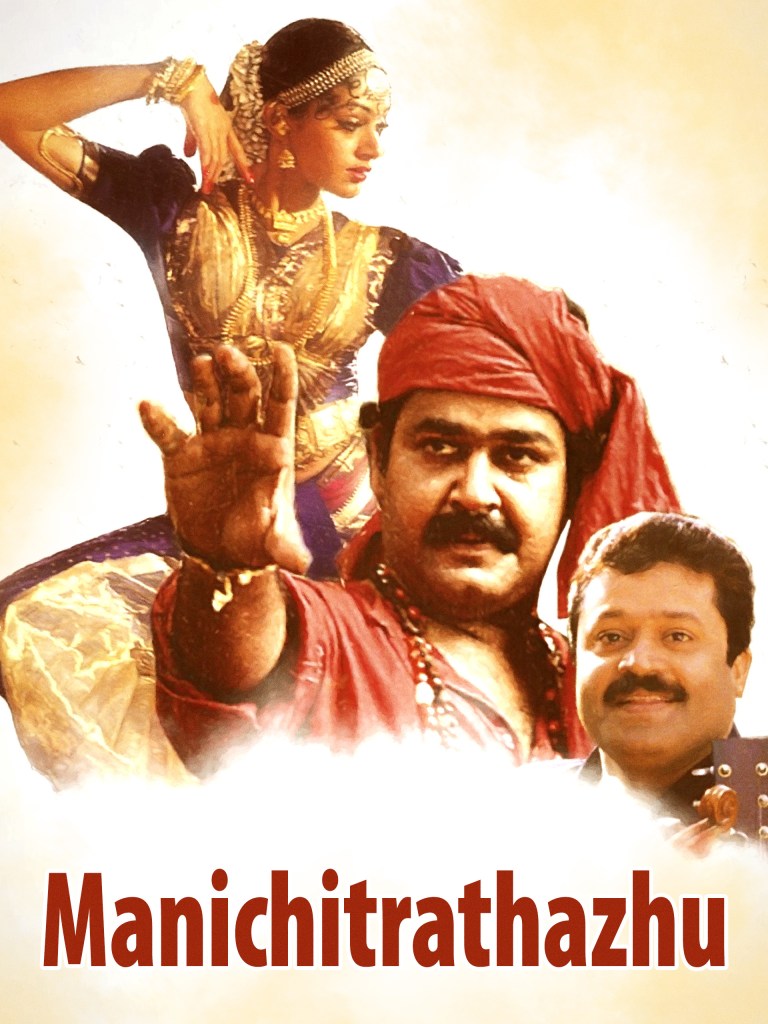
I had seen Fazil’s Manichitrathazhu a couple of times before. While I could appreciate it when provided with the appropriate history and context of the film, I could never see it beyond that. This is partly because I had already seen the remade versions—Chandramukhi and Bhool Bhulayya—and call me uncultured, but I enjoyed them.
While it’s glaringly evident that Manichitrathazhu is still a far superior version, my vision was too jaded to viscerally understand why the remade versions are hated so much. Every industry has its own set of audiences to cater to, so liberties with the tone of narration have been taken accordingly.
It was only after I happened to catch a re-release this year that I felt more immersed in the film. It was a night show, and Sobhana’s performance was so unnerving that it stayed with me until I reached home. I was half-fearing a screaming Shobhana dancing and running toward me in the middle of the night.
It was finally pleasing to viscerally experience the fear this film evokes and to witness Shobana’s captivating performance on the big screen. It made me realize just how much watching any film in a theater can significantly change the type of impact it leaves on you.
20. Goopy Gyne Baagha Byne (Bengali)

I had always heard about Goopy Gyne Bagha Byne being a cult classic, but I’ll admit—I didn’t rush to watch it. Maybe it was the idea of a musical fantasy film meant for kids that made me feel like it wouldn’t resonate with me, especially considering the time period it was released in.
For a film that came out in 1969, it still manages to retain a certain charm—particularly the elaborate 10-minute dance sequence by ghostly figures meant to represent the class divide in society. It’s equal parts eerie and beautiful.
Apart from this, the premise is fairly simple—it’s a whimsical story about two misfits—a tone-deaf singer and a terrible drummer—who gain magical powers and end up saving kingdoms. But beneath the charm, it’s also about greed, war, and power struggles, all disguised as a children’s fable.
That said, it’s not a flawless film. A lot of it doesn’t quite land with the same impact in the present day. Some parts feel slow, and the musical and fantastical elements might not work for everyone—especially for a non-Bengali like me.
Perhaps my fascination with this film has more to do with the fact that it’s Satyajit Ray’s—the same man who gave us Pratidwani, Kapurush, Nayak, and Aranyer Din Ratri.
As I began writing this article, I realized it’s going to be an extremely long one. Honestly, I’m not even sure if anyone is going to read it. But I decided to finish it anyway—mainly to get back into the habit of writing.
To keep things manageable, I’ve divided it into three parts.
The next two parts will be written soon.
 A notebook.
Leave a comment